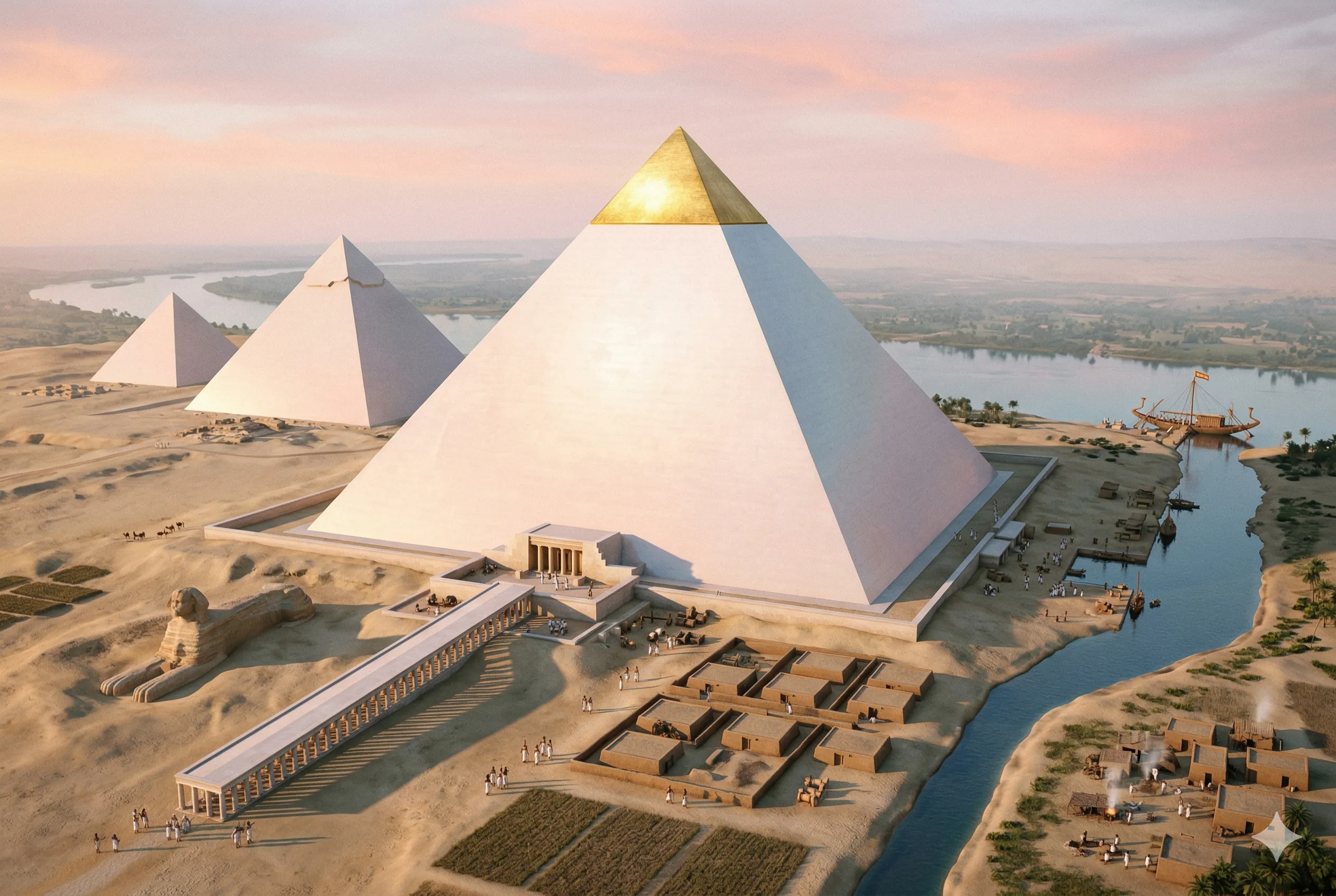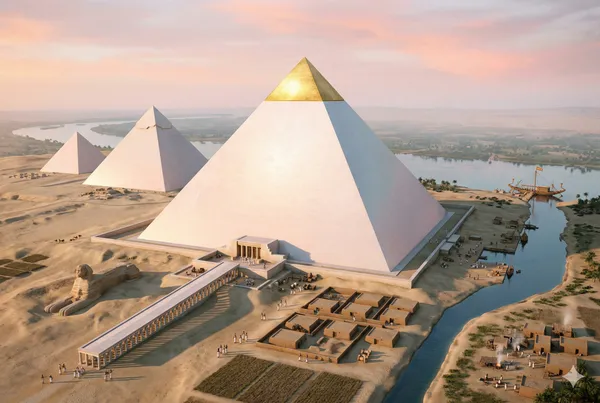
Great Pyramid of Giza
The last surviving wonder of the original Seven Wonders of the Ancient World, standing for over 4,500 years on the Giza plateau outside Cairo.
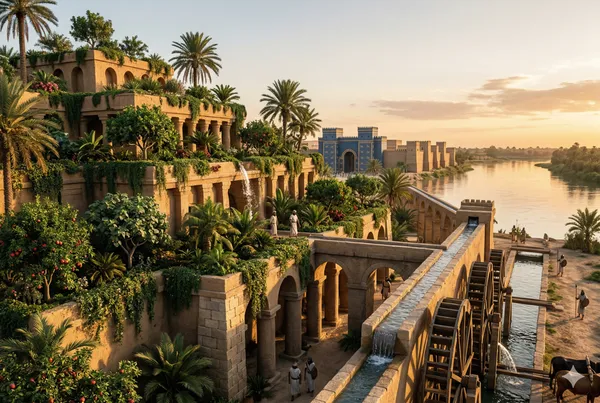
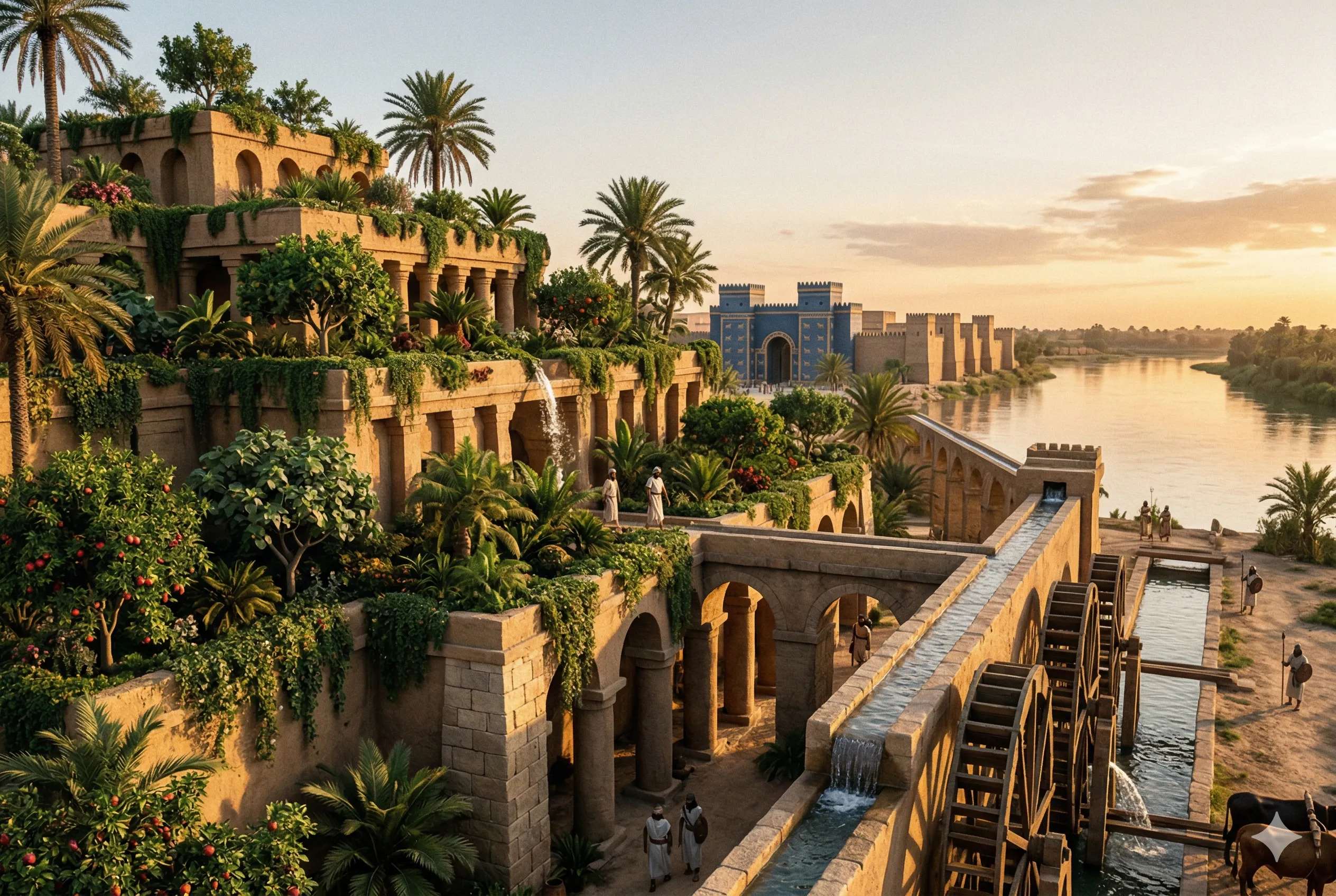
Hanging Gardens of Babylon
A legendary series of tiered gardens in ancient Babylon, said to have been built by King Nebuchadnezzar II around 600 BCE — and the only one of the Seven Wonders whose existence remains disputed.
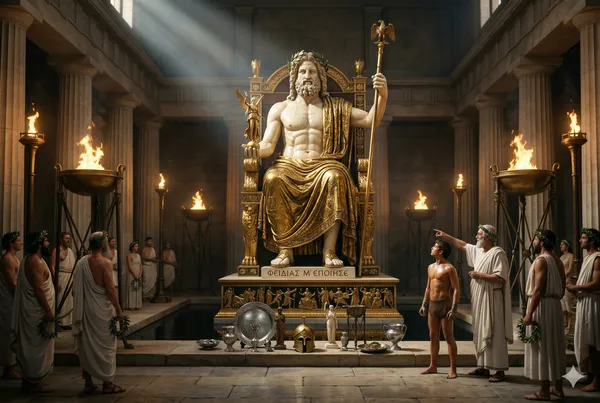
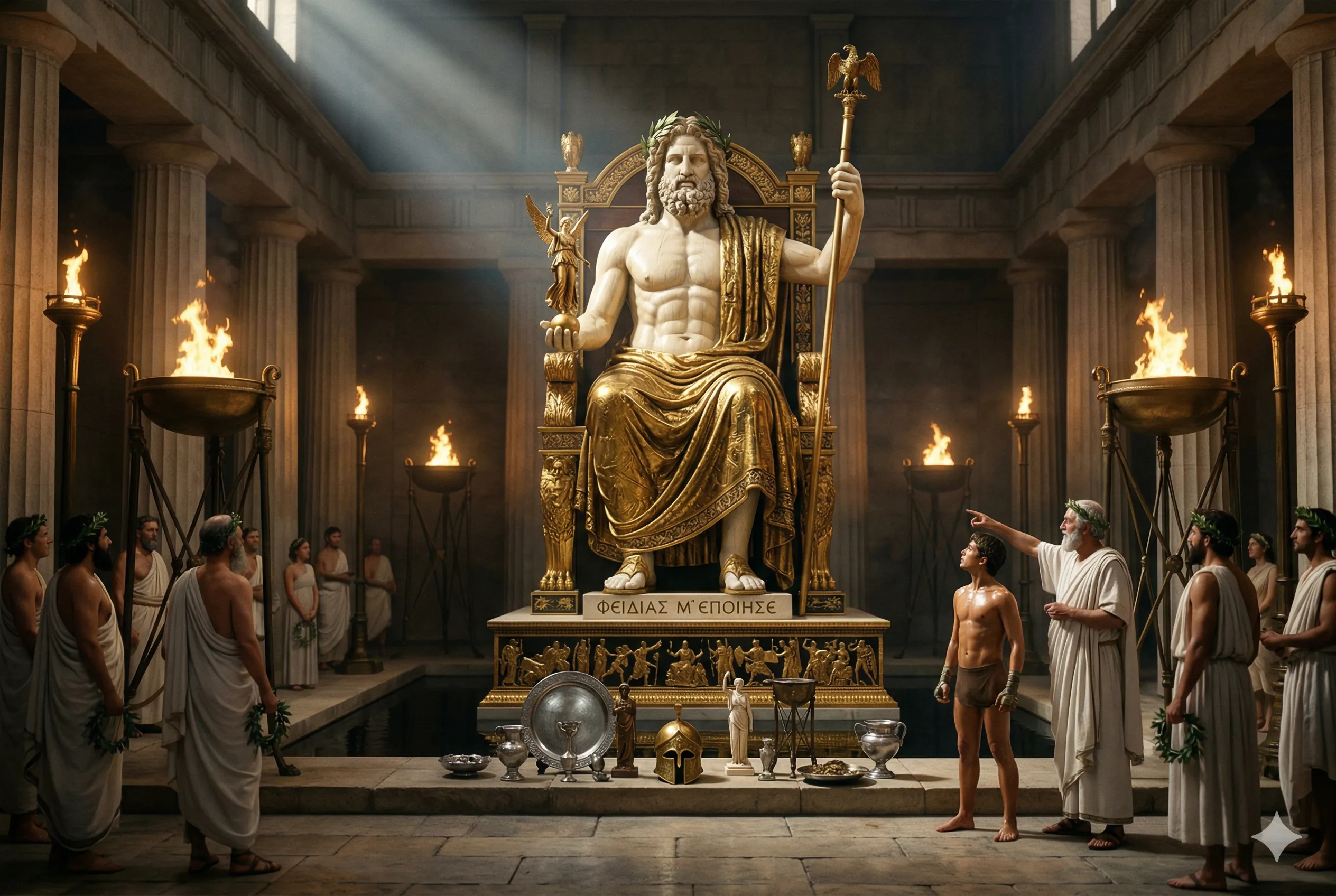
Statue of Zeus at Olympia
A colossal chryselephantine sculpture of the king of the Greek gods, crafted by the master sculptor Pheidias around 435 BCE and housed in the Temple of Zeus at Olympia.
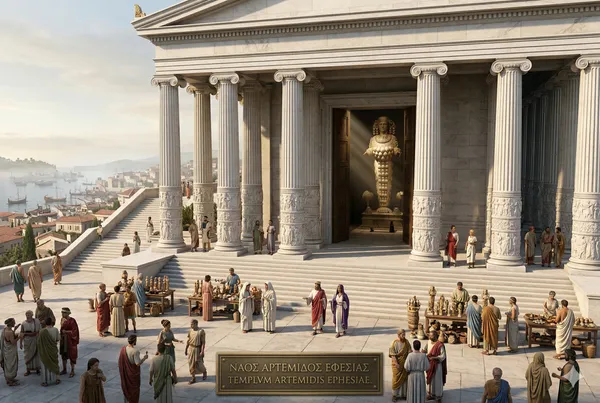
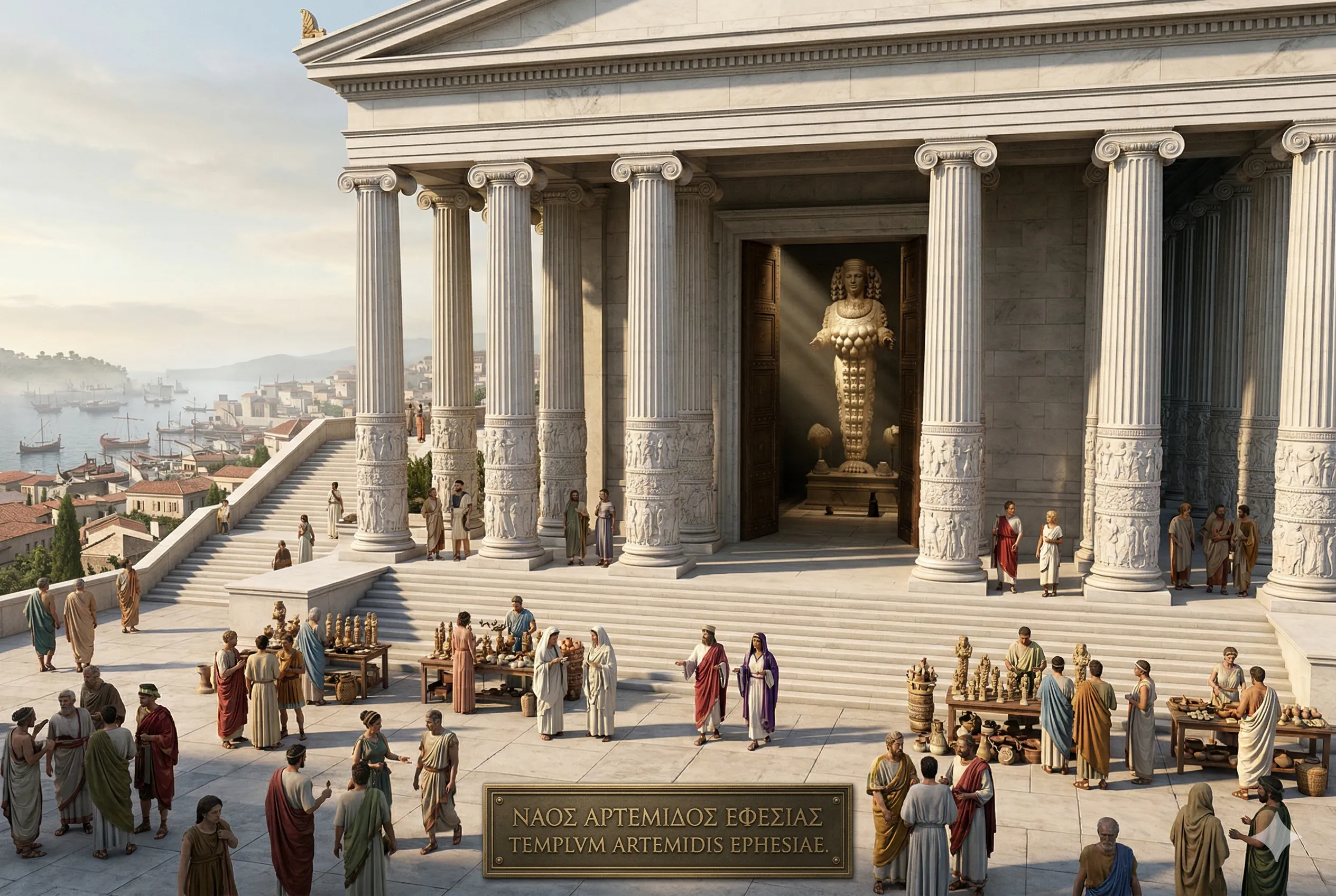
Temple of Artemis at Ephesus
A magnificent Greek temple dedicated to the goddess Artemis, located at Ephesus in modern-day Turkey, described by ancient travellers as surpassing all other structures in its splendour.
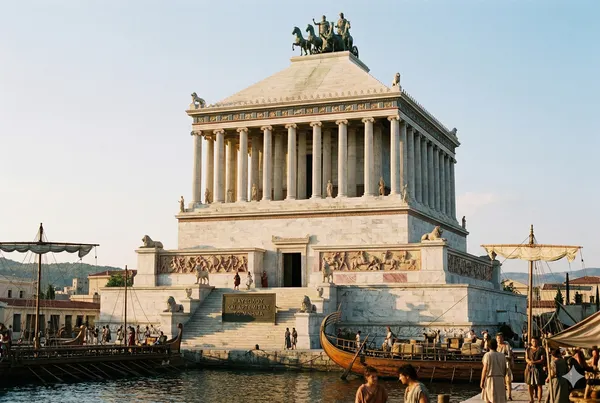
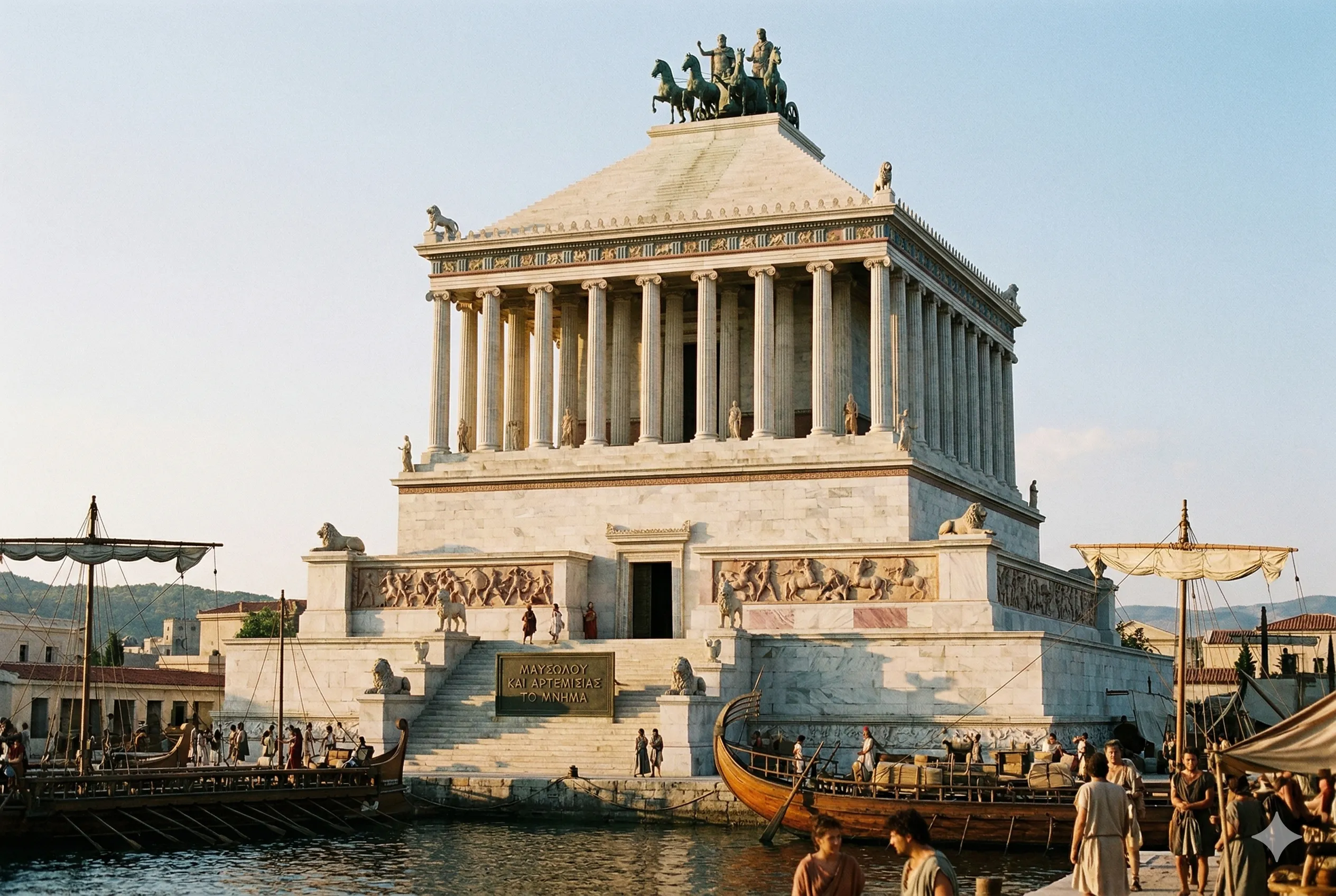
Mausoleum at Halicarnassus
A grand tomb built for Mausolus, the satrap of Caria, and his wife Artemisia II around 353 BCE — so magnificent that it gave us the word "mausoleum" itself.
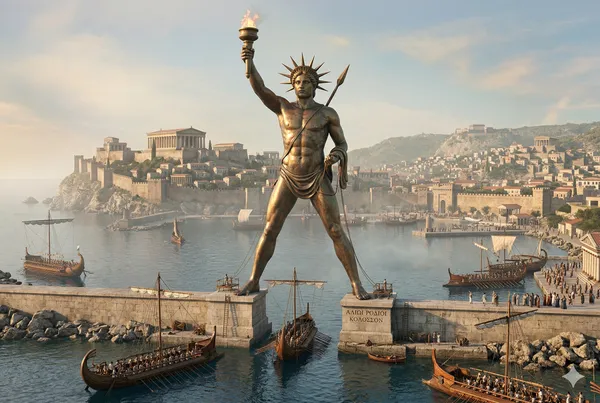
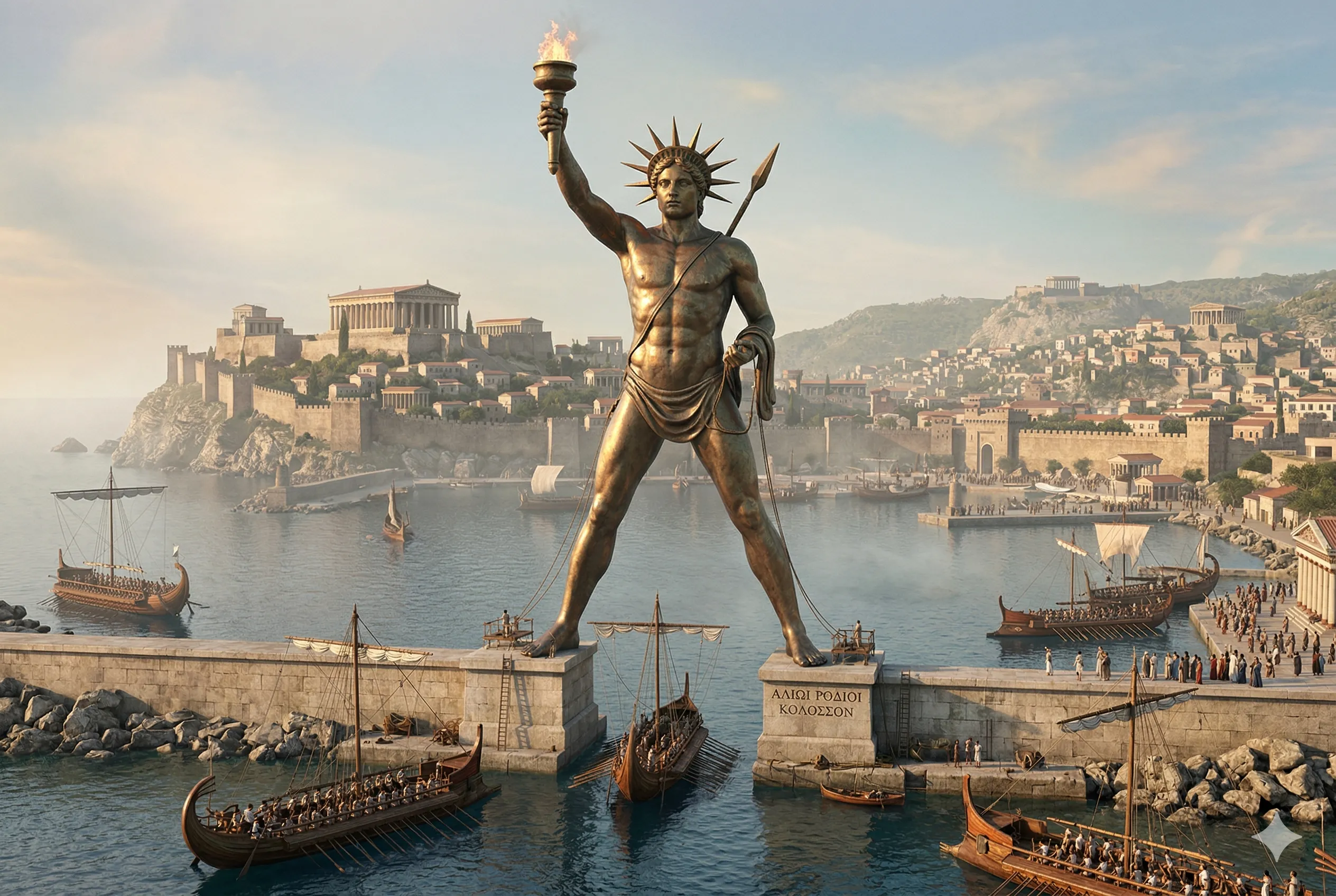
Colossus of Rhodes
A towering bronze statue of the sun god Helios, erected at the entrance to the harbour of Rhodes around 280 BCE and standing over 30 metres tall — one of the tallest statues of the ancient world.
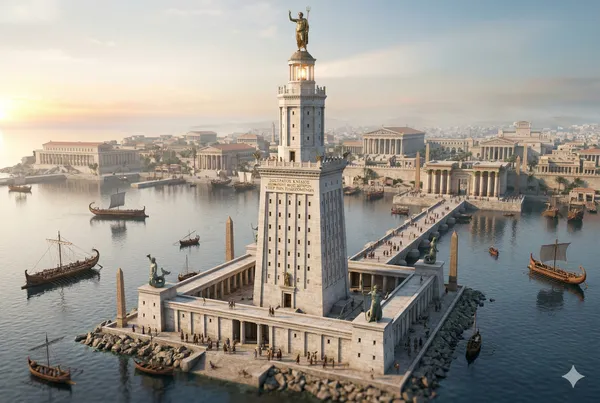
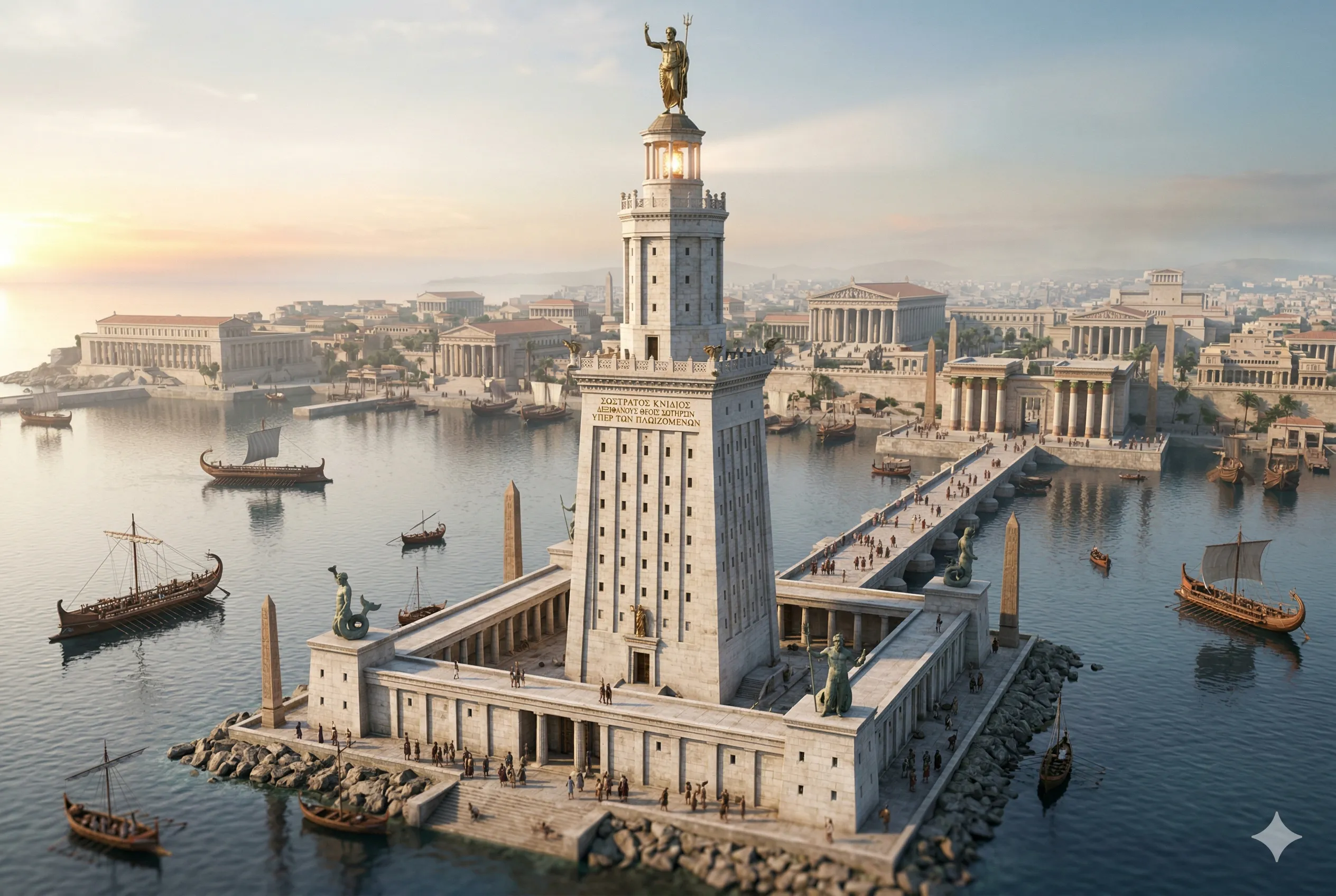
Lighthouse of Alexandria
A towering lighthouse on the island of Pharos in Alexandria, Egypt, built around 280 BCE and standing between 100 and 135 metres tall — for centuries the tallest man-made structure in the world after the Great Pyramid.
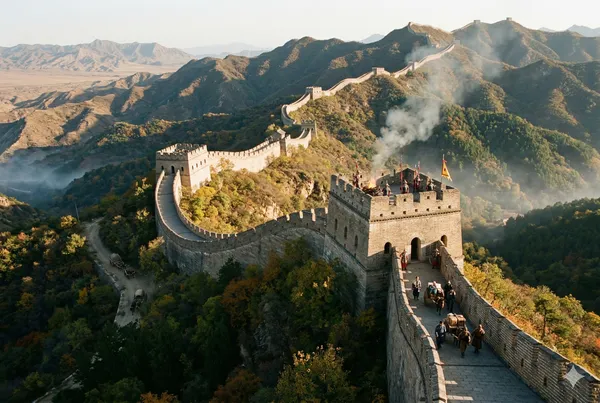
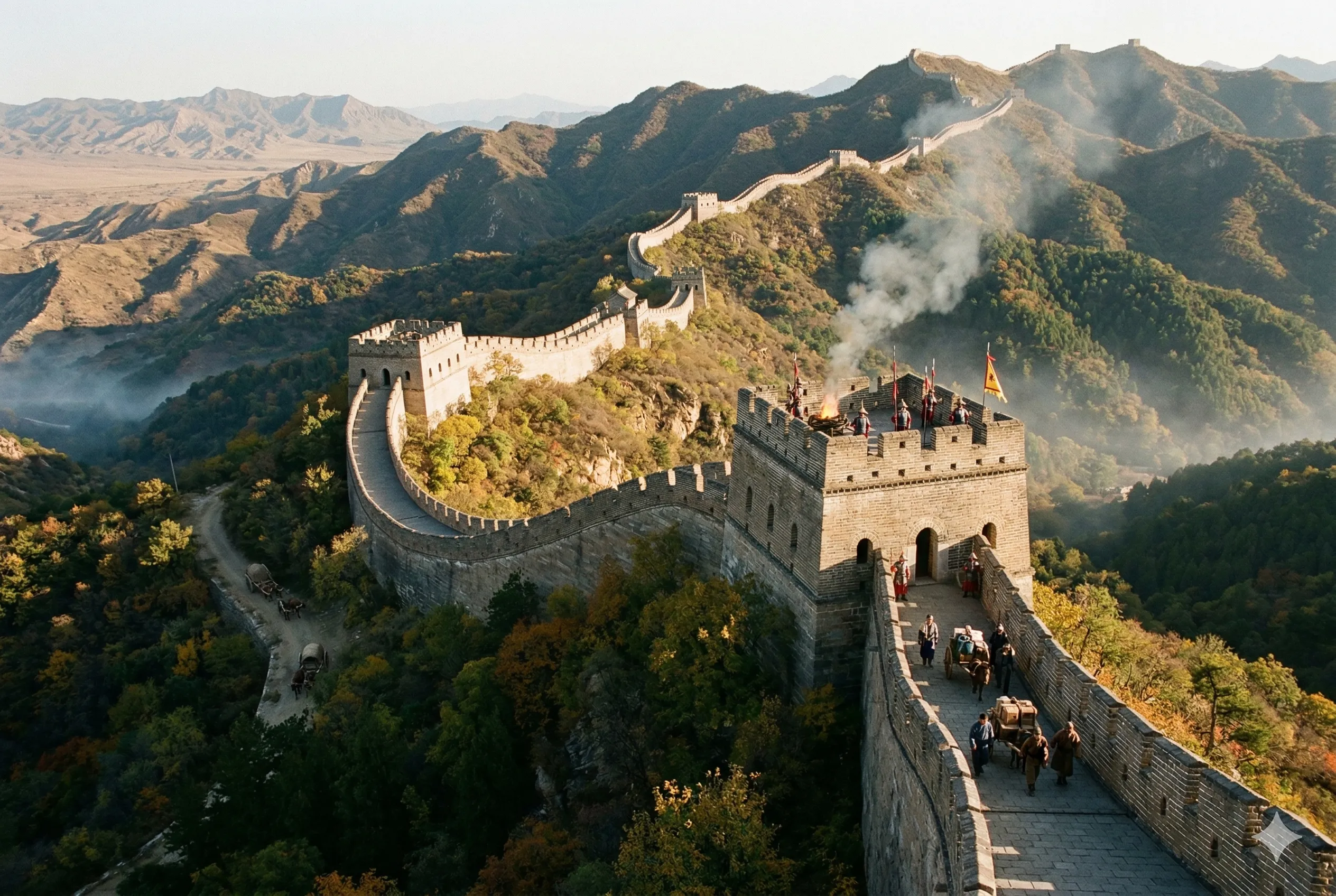
Great Wall of China
A series of ancient fortifications stretching over 21,000 kilometres across northern China, built and rebuilt over many centuries to protect Chinese states from nomadic invasions from the north.
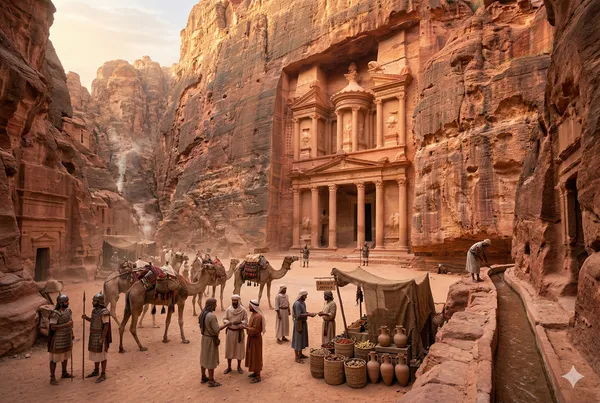
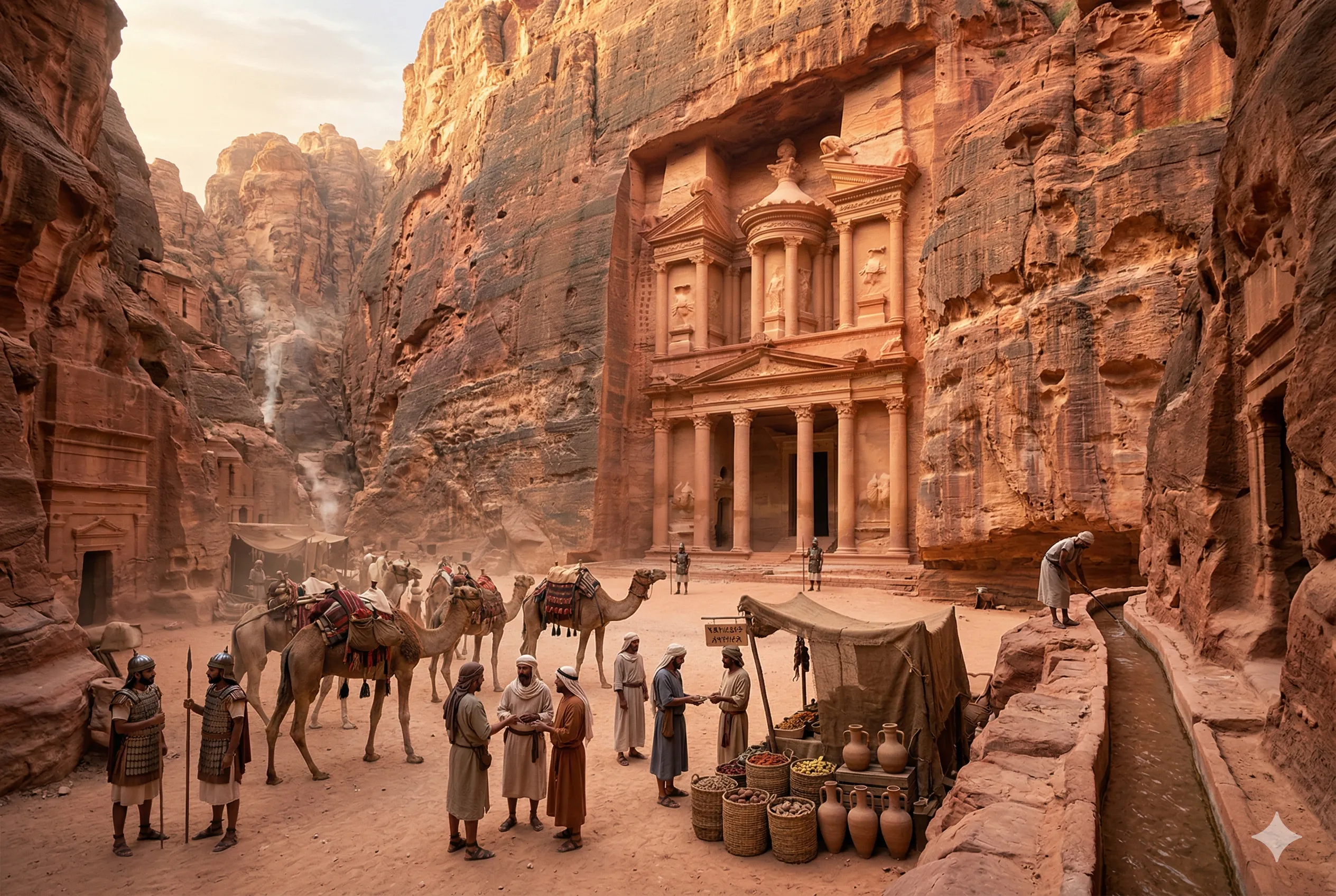
Petra
The rose-red city of the Nabataeans, carved directly into the sandstone cliffs of southern Jordan — a UNESCO World Heritage Site and one of the most dramatic archaeological landscapes on Earth.
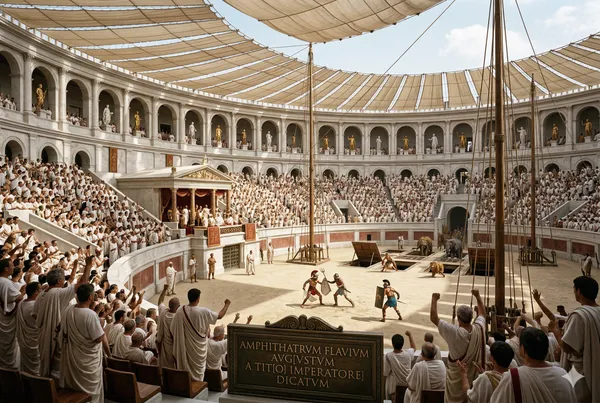
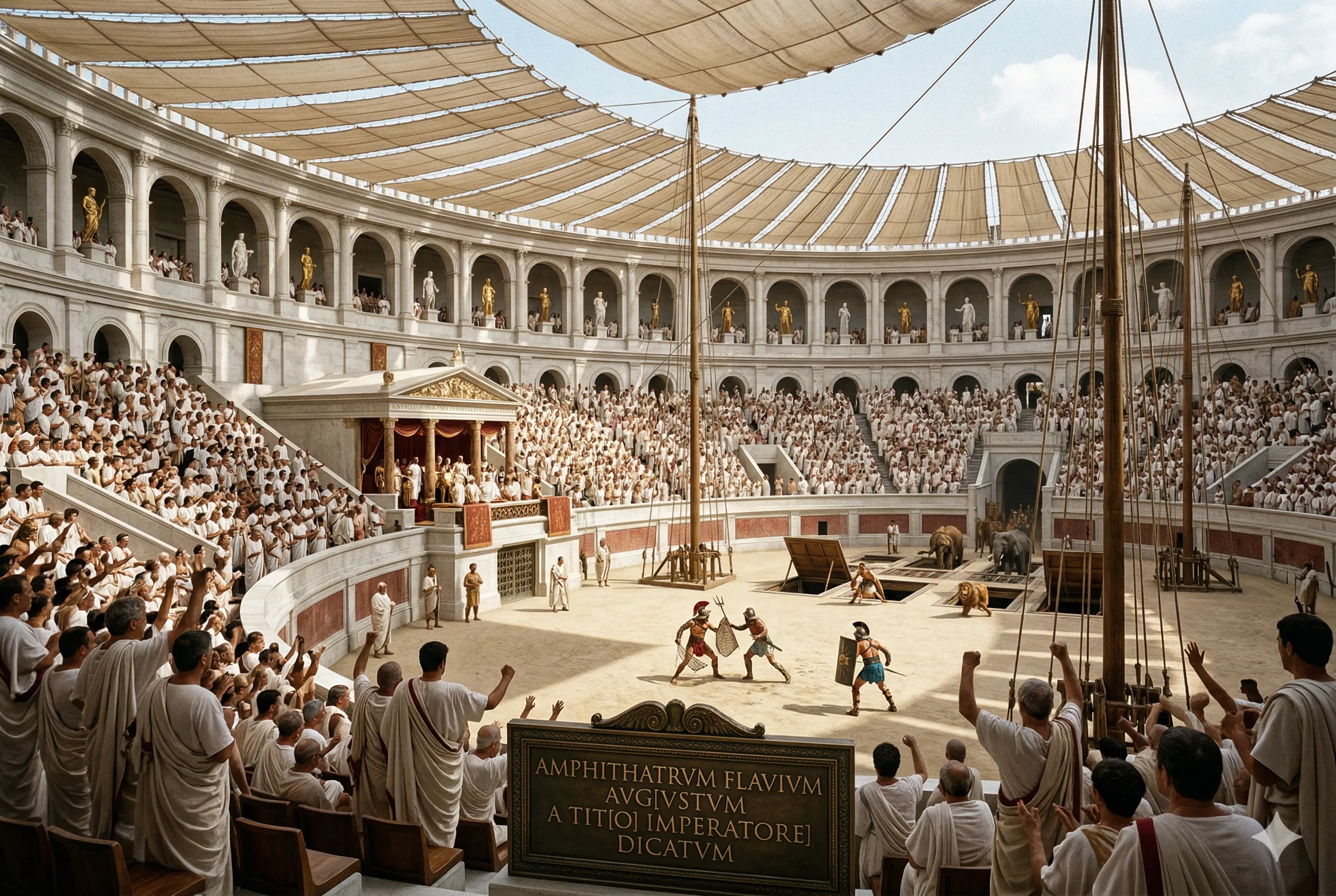
Colosseum
The greatest amphitheatre of the ancient world, built in the heart of Rome between 70 and 80 CE, capable of holding up to 80,000 spectators for gladiatorial contests, animal hunts, and public spectacles.
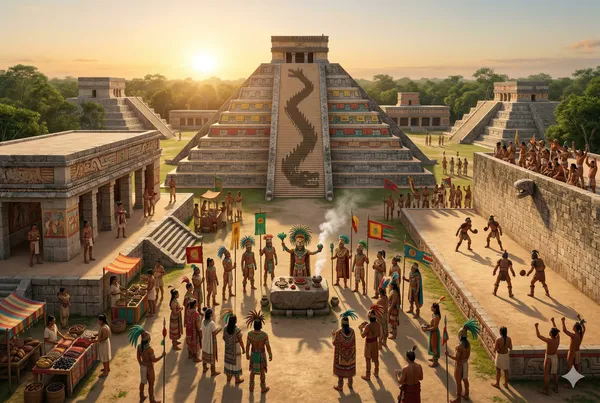
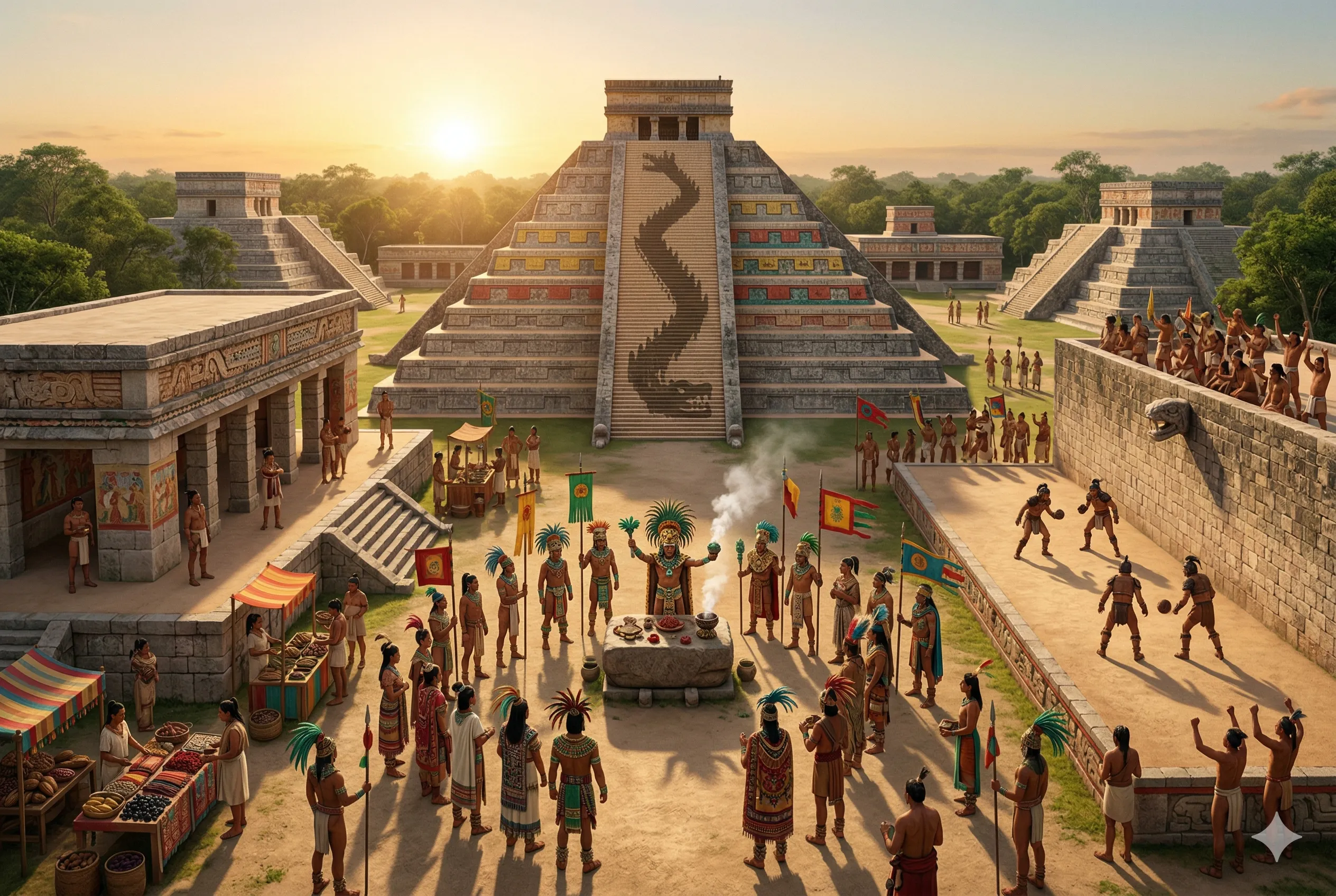
Chichén Itzá
One of the largest and most remarkable cities of the ancient Maya civilisation, located in the Yucatán Peninsula of Mexico and renowned for its monumental architecture, astronomical precision, and cultural legacy.
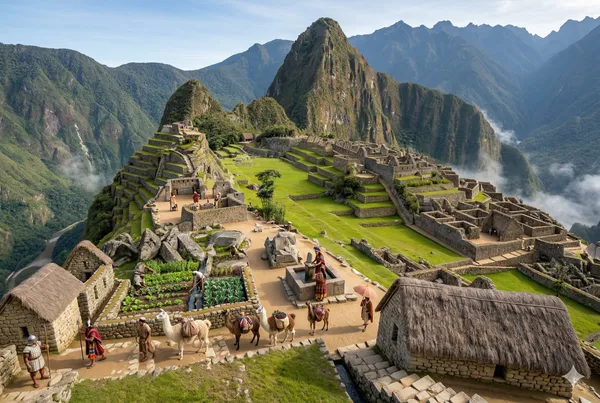
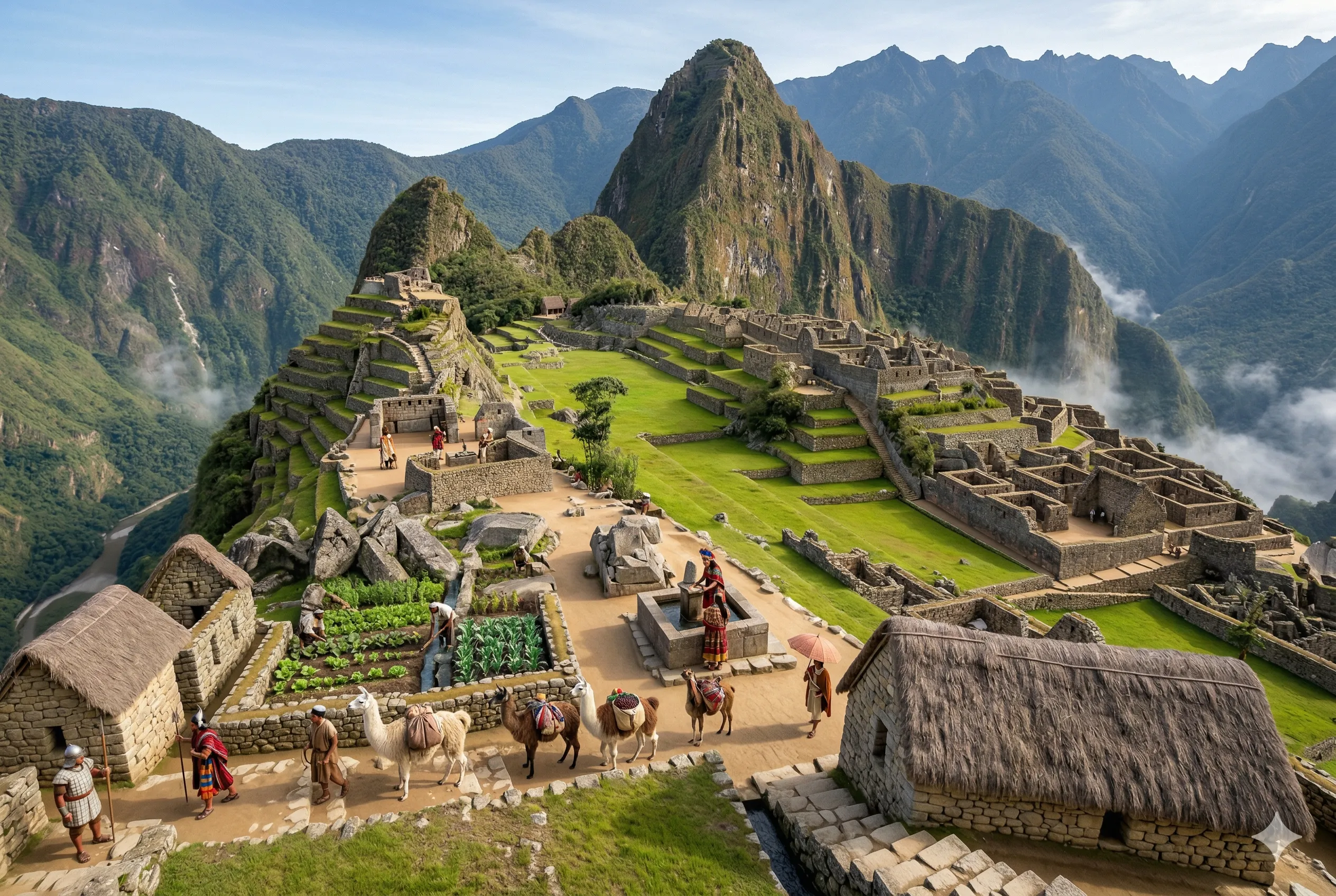
Machu Picchu
A 15th-century Inca citadel perched at 2,430 metres above sea level in the Andes Mountains of Peru, hidden from the outside world for centuries and now one of the most iconic archaeological sites on Earth.
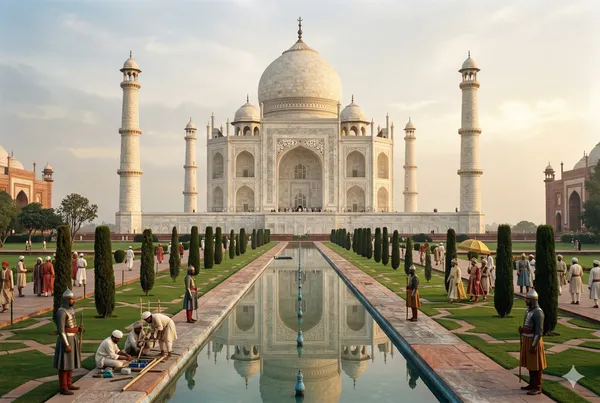
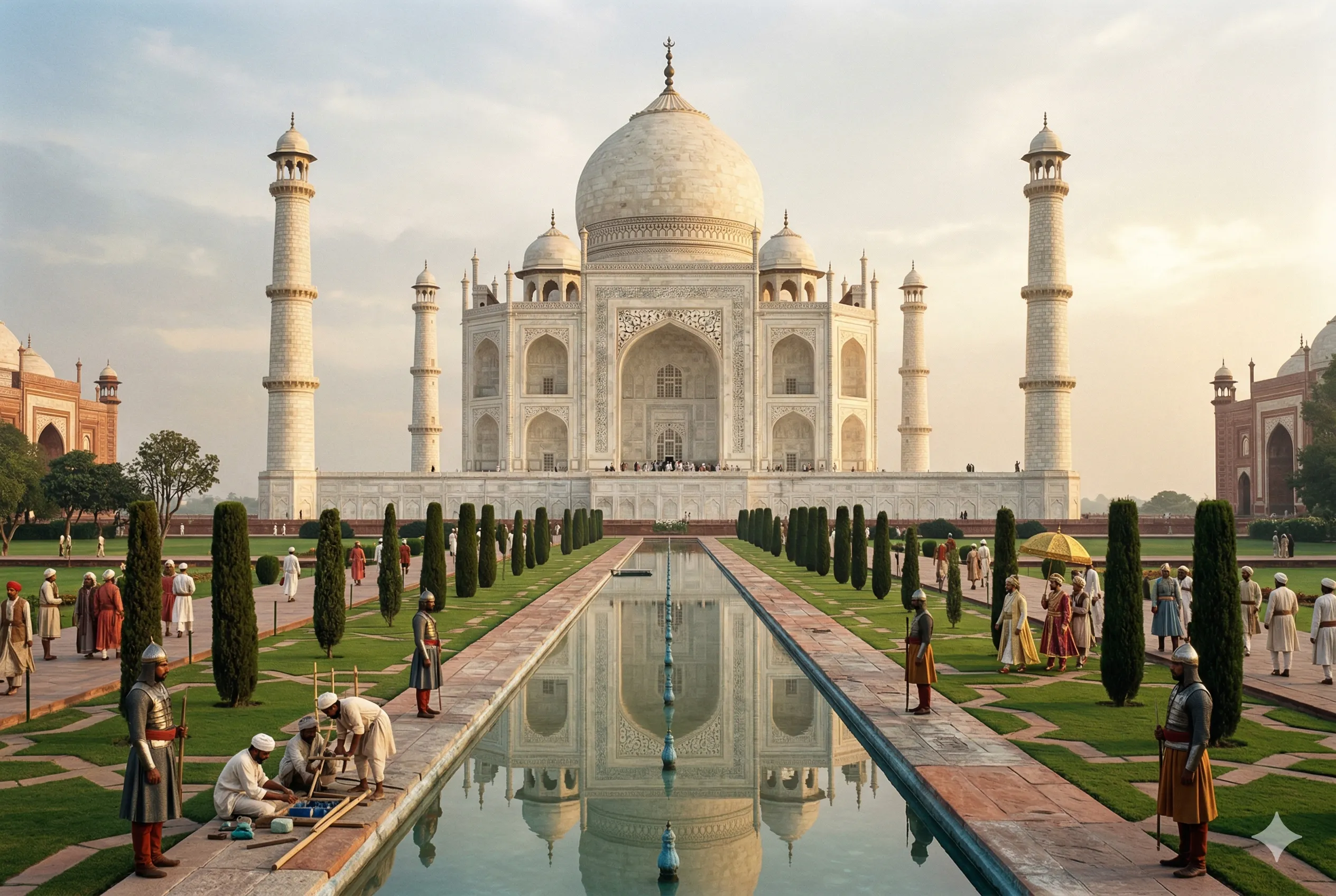
Taj Mahal
An immaculate white marble mausoleum built on the banks of the Yamuna River at Agra, India, by Mughal emperor Shah Jahan in memory of his beloved wife Mumtaz Mahal — a monument to grief, love, and imperial splendour.
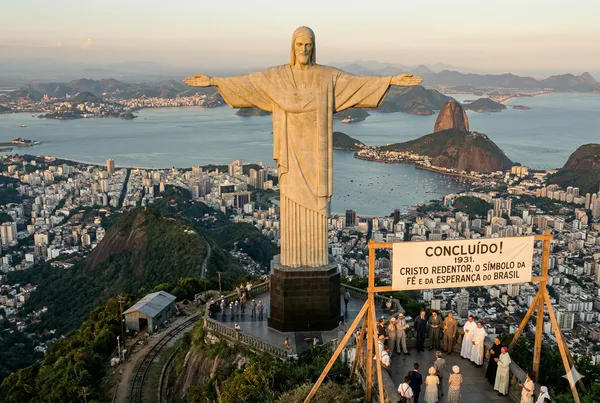
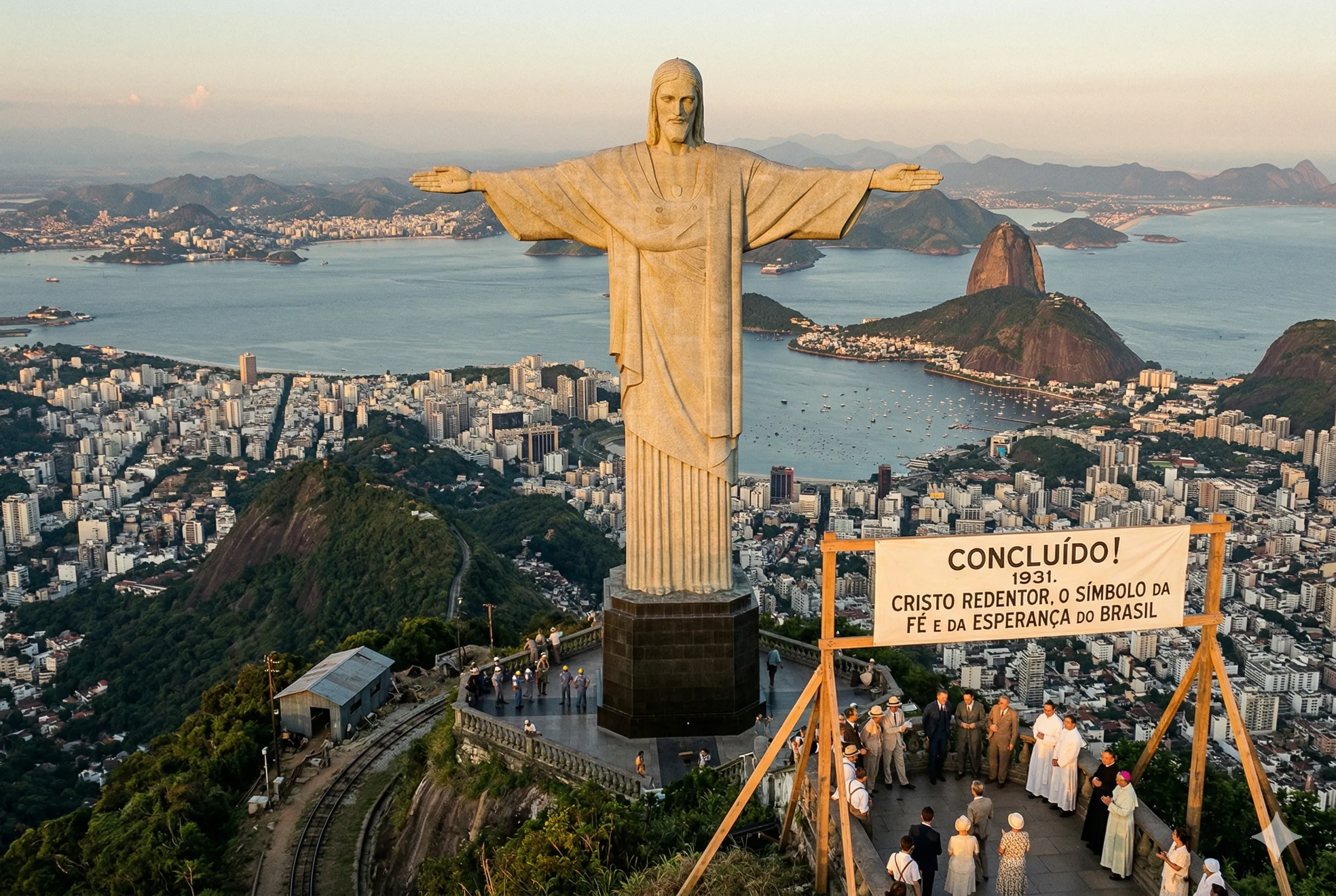
Christ the Redeemer
A colossal Art Deco statue of Jesus Christ standing atop the Corcovado mountain in Rio de Janeiro, Brazil, with arms outstretched over the city — one of the most recognisable monuments in the world.
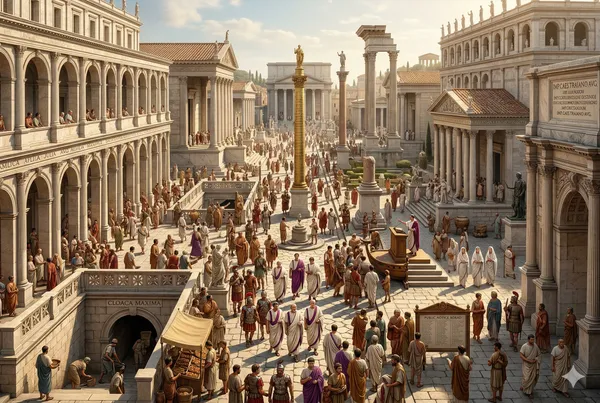
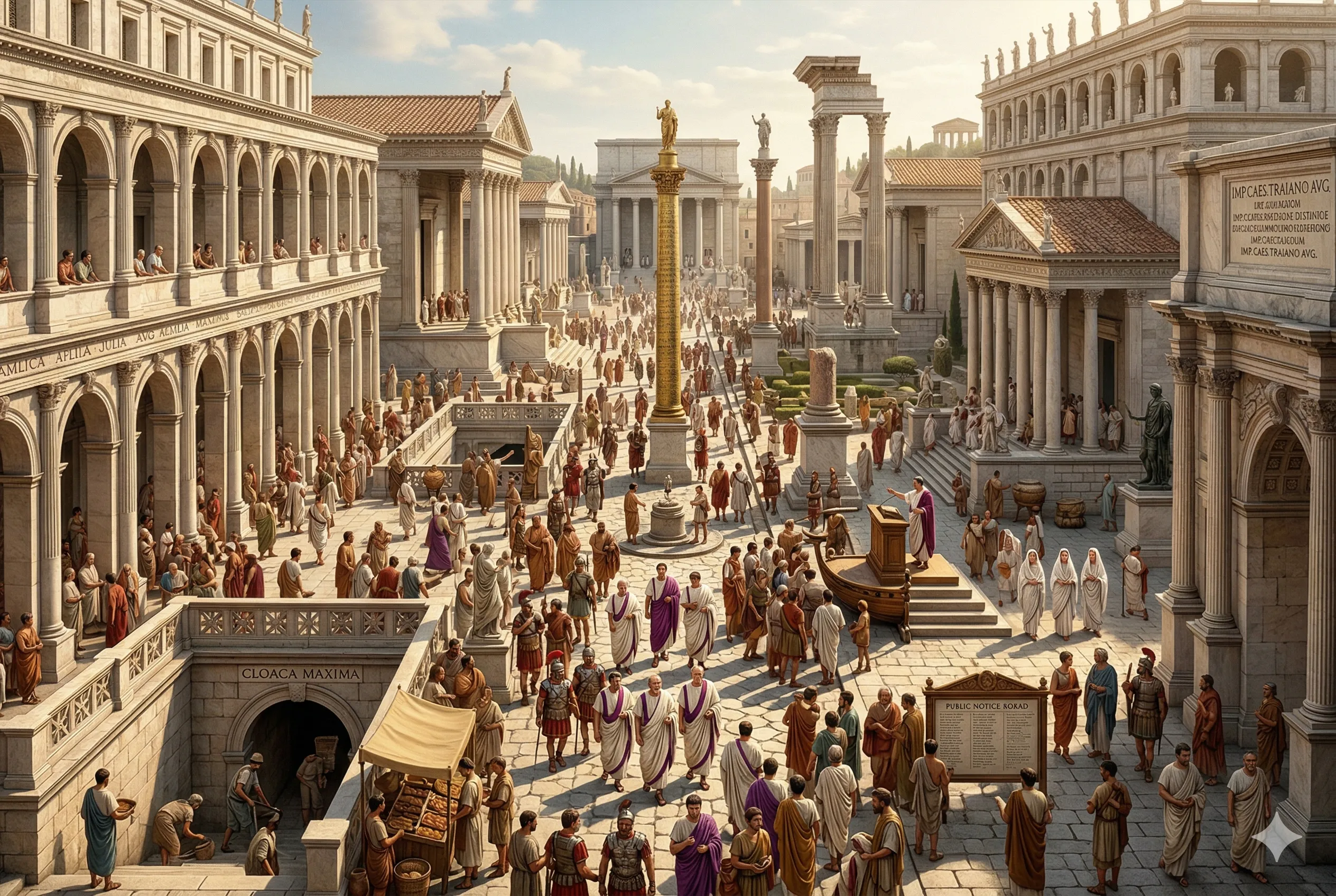
Roman Forum
The beating heart of ancient Rome — a rectangular plaza surrounded by the ruins of great temples, basilicas, and public buildings that once served as the centre of Roman public life for over a thousand years.
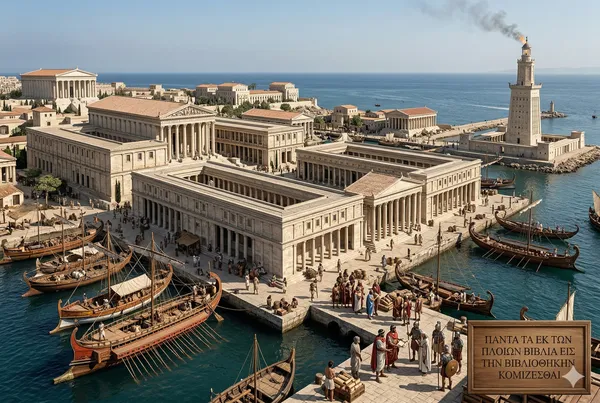
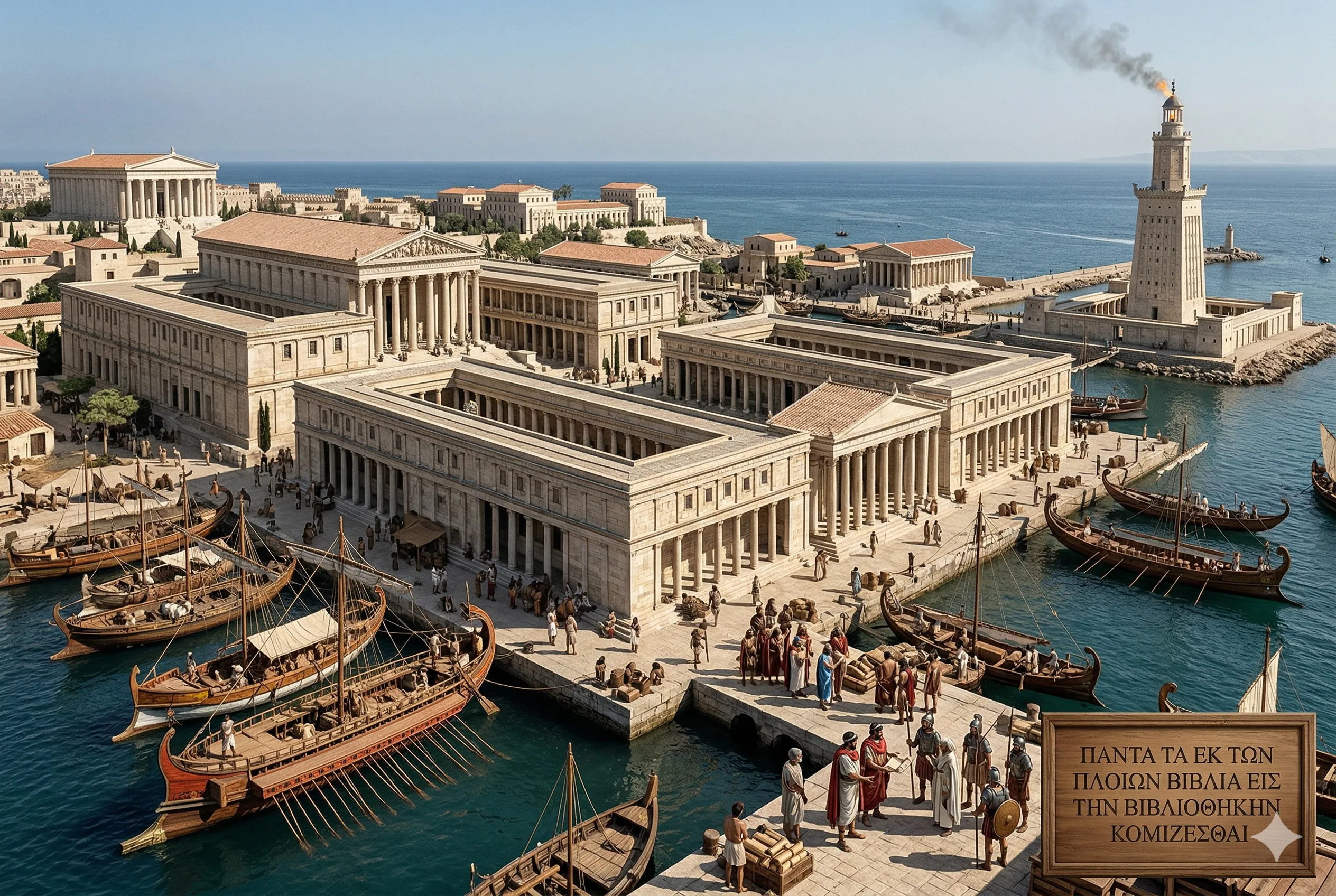
Library of Alexandria
The greatest library of the ancient world, founded in Alexandria, Egypt, in the 3rd century BCE under the Ptolemaic dynasty — a visionary institution that sought to collect the sum of all human knowledge under one roof.
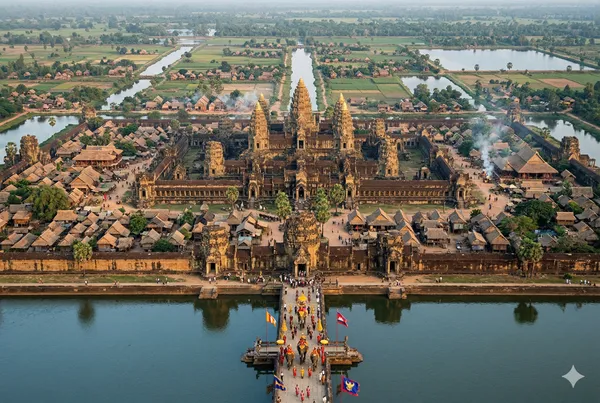
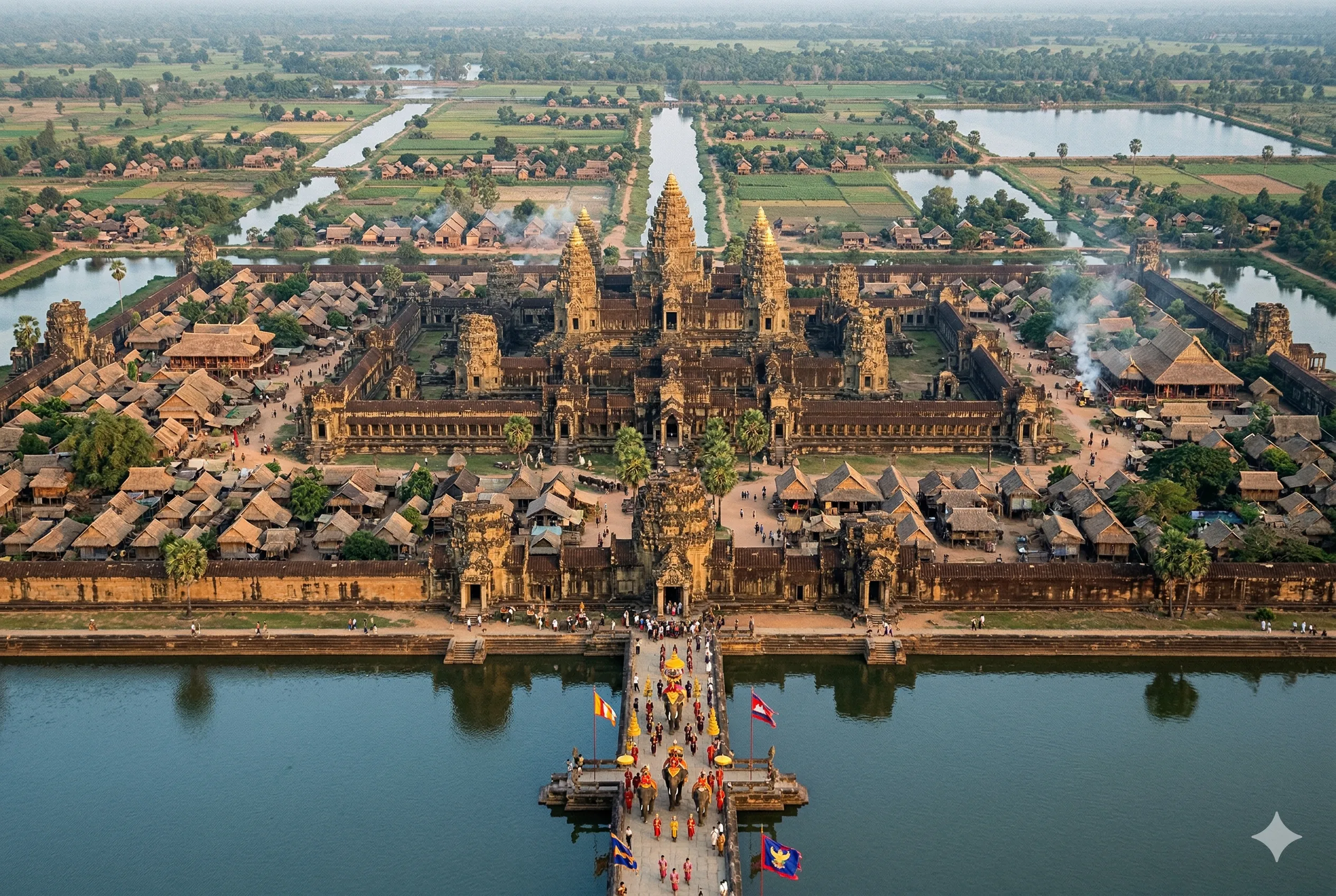
Angkor Vat
The world's largest religious monument — a breathtaking 12th-century Khmer temple complex in northwestern Cambodia, built as both a state temple and capital city by King Suryavarman II.
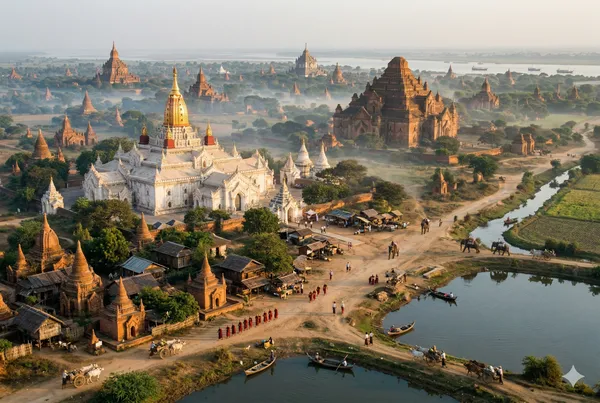
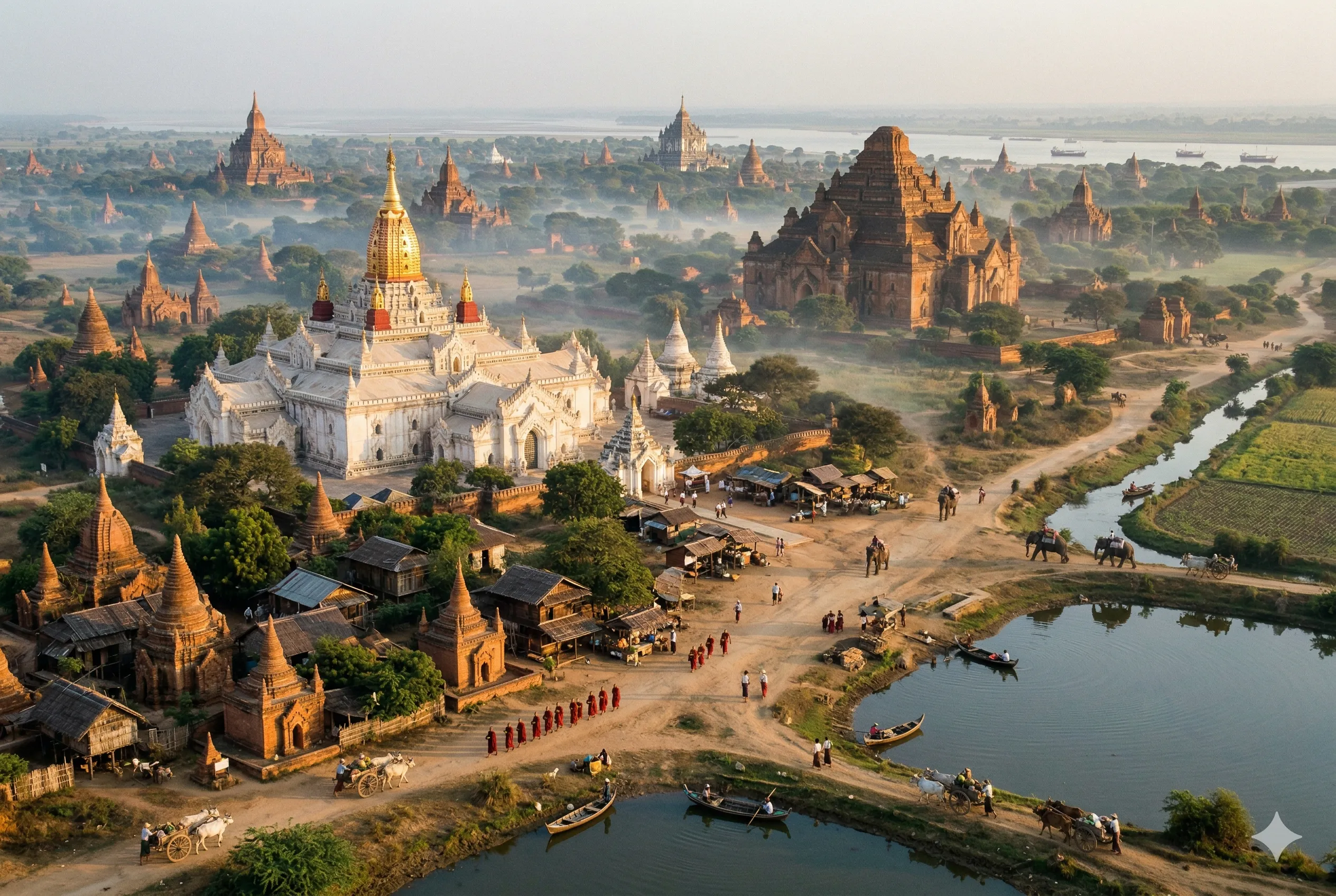
Bagan
An ancient city on the plains of central Myanmar containing over 3,500 Buddhist temples, pagodas, and monasteries — the greatest concentration of Buddhist architecture in the world, built over three centuries by the kings of the Pagan Empire.
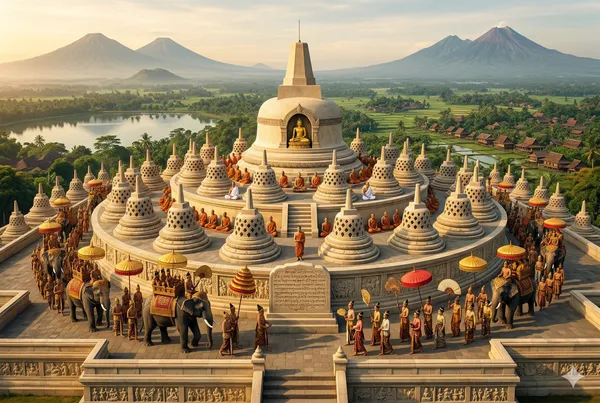
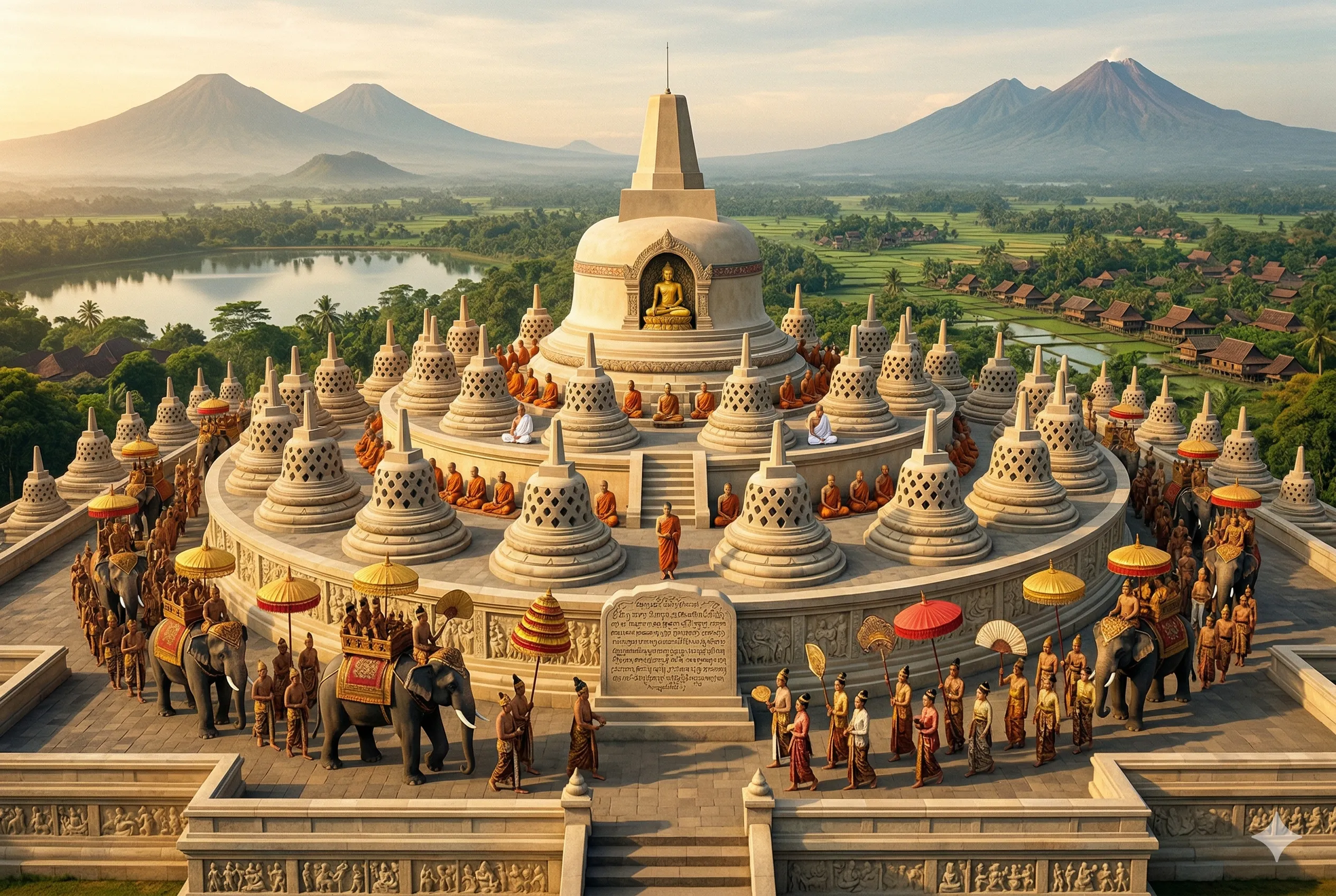
Borobudur
The world's largest Buddhist monument — a 9th-century Mahayana Buddhist temple on the island of Java, Indonesia, built as a symbolic representation of the Buddhist cosmological universe in stone.
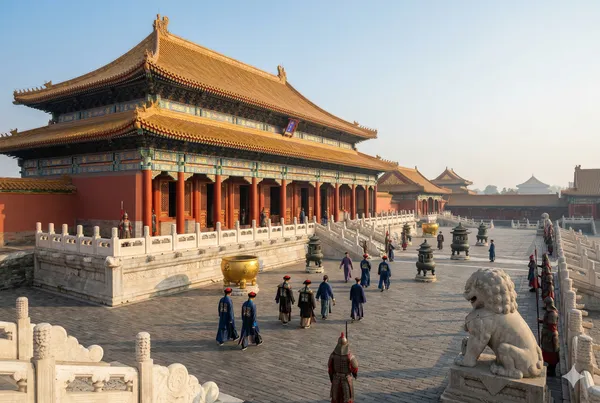
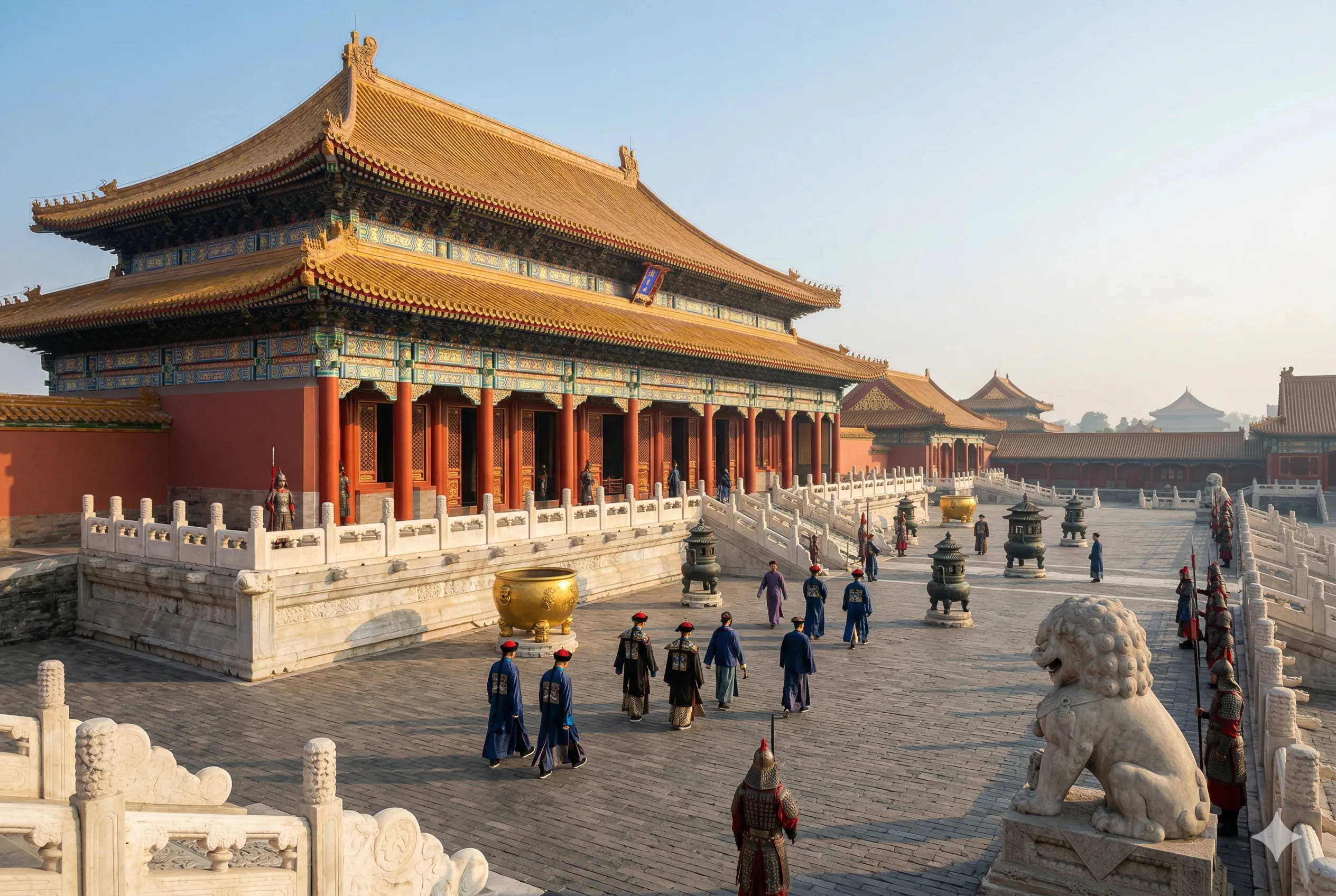
Forbidden City
The largest preserved palace complex in the world — a vast walled city within a city at the heart of Beijing, home to 24 Chinese emperors of the Ming and Qing dynasties for nearly five centuries.
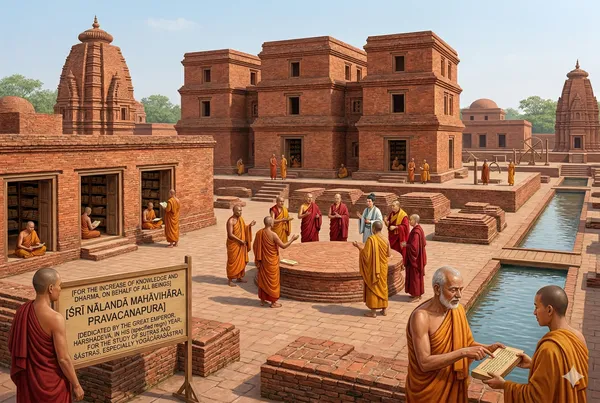
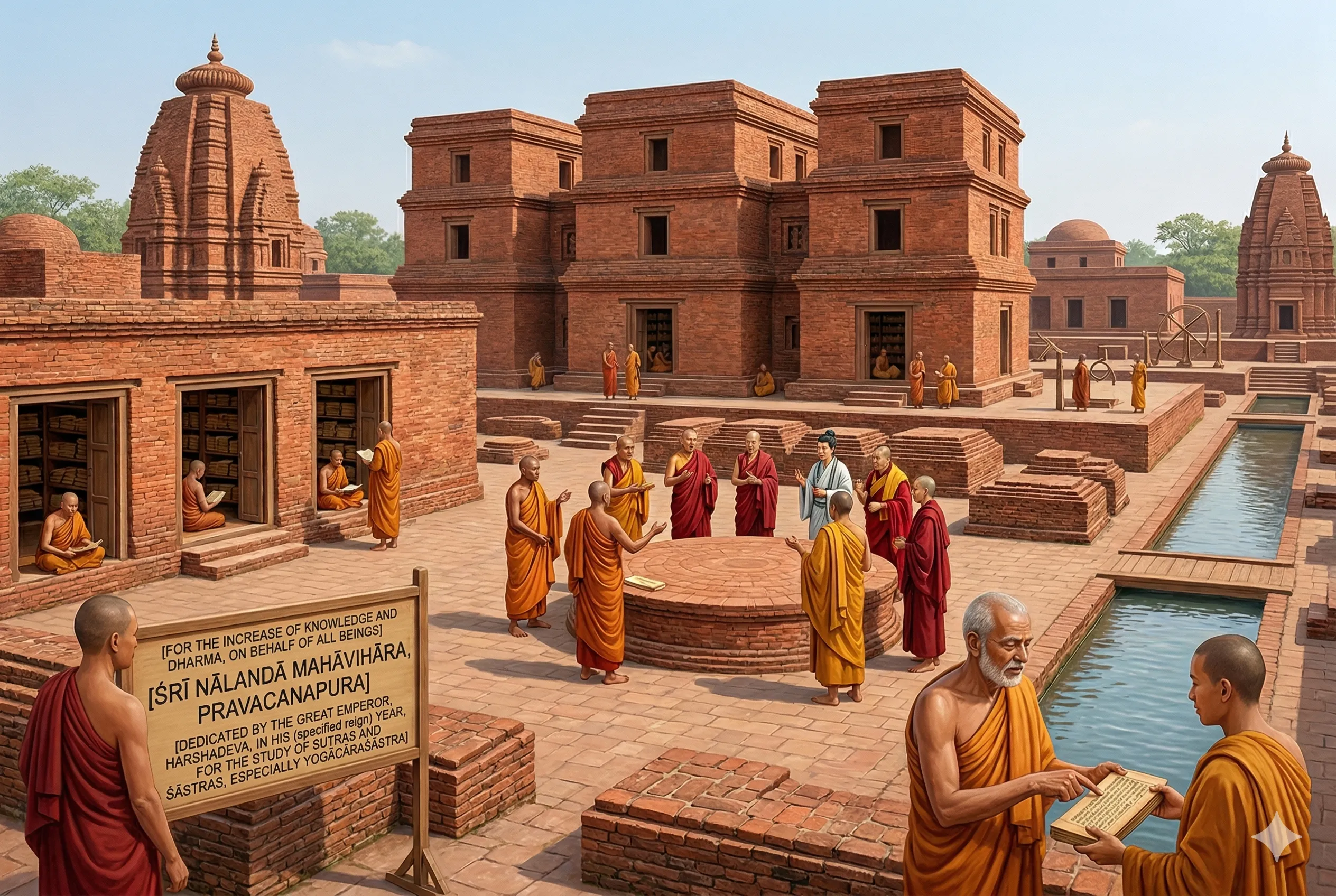
Nalanda
The ancient world's greatest centre of Buddhist learning — a vast monastic university in Bihar, India, that flourished for 800 years and attracted scholars from across Asia, making it one of the most important intellectual institutions in human history.
Built around 2560 BCE as a tomb for Pharaoh Khufu, the Great Pyramid of Giza stands 138.5 metres tall and held the record as the world’s tallest man-made structure for nearly 4,000 years. Constructed from an estimated 2.3 million limestone and granite blocks, each weighing between 2.5 and 15 tonnes, it is a testament to the ingenuity and organisation of ancient Egyptian civilisation.
The precision of its construction remains staggering — the base is level to within just 2.1 centimetres, and its sides are aligned to the cardinal points of the compass with extraordinary accuracy. The interior conceals a network of chambers and passages, including the King’s Chamber, where Khufu’s sarcophagus still rests.
Alone among the Seven Wonders of the Ancient World, the Great Pyramid has survived the millennia largely intact. It continues to inspire wonder, debate, and reverence as one of humanity’s most extraordinary achievements.
Described by ancient Greek and Roman writers as a breathtaking marvel of engineering, the Hanging Gardens of Babylon were said to rise in cascading terraces above the flat Mesopotamian plain, their lush foliage visible for miles. The gardens were reportedly irrigated by an ingenious system of pumps and channels drawing water from the Euphrates River.
Legend holds that Nebuchadnezzar II built them to ease the homesickness of his Median wife, Amytis, who longed for the green mountains of her homeland. The gardens were said to bloom with exotic trees, flowering vines, and fruit-bearing plants, creating an oasis of living beauty in the heart of a desert city.
No definitive archaeological evidence of the gardens has ever been found. Some scholars believe they may have existed in Nineveh rather than Babylon, or that the accounts were embellished by travellers. Whatever their reality, the Hanging Gardens remain an enduring symbol of human longing and the power of beauty.
Seated on a magnificent cedar-wood throne inlaid with ebony, ivory, gold, and precious stones, the Statue of Zeus at Olympia measured approximately 12 metres in height and dominated the interior of its temple entirely. Zeus himself held a small statue of Nike, the goddess of victory, in his right hand, and a sceptre topped with an eagle in his left.
Pheidias, the same sculptor who created the great statue of Athena in the Parthenon, employed the chryselephantine technique — sheets of ivory for the flesh and hammered gold for the robes and throne. Ancient visitors reported that seeing the statue was a transformative, almost divine experience. The Roman general Aemilius Paullus declared that Pheidias alone had succeeded in depicting the god as Homer had described him.
The statue was likely destroyed in the 5th century CE, possibly in a fire. The workshop where Pheidias created it was excavated in the 20th century, and his tools and moulds were found among the ruins.
The Temple of Artemis at Ephesus was not built once but many times. The most celebrated version, completed around 550 BCE with financial contributions from the legendary King Croesus of Lydia, stood 115 metres long and 55 metres wide — more than twice the footprint of the Parthenon. Its forest of 127 Ionic columns, each 18 metres tall and decorated with carved reliefs at their bases, left visitors breathless.
In 356 BCE, on the night Alexander the Great was born, a man named Herostratus set fire to the temple, seeking immortal fame. The Ephesians rebuilt it even more grandly, and Alexander later offered to fund its reconstruction in full — an offer the city diplomatically declined. The rebuilt temple became the site of Artemis’s cult, drawing pilgrims and merchants from across the ancient world.
Destroyed by the Goths in 268 CE, the temple was never rebuilt. Today, a single column stands on the site — a lonely echo of what was once considered the most beautiful structure in the ancient world.
Rising approximately 45 metres above the city of Halicarnassus (modern Bodrum, Turkey), the Mausoleum was a masterpiece of architectural ambition. Its design fused Greek, Egyptian, and Lycian influences, with a stepped podium supporting a colonnade of 36 Ionic columns, above which rose a pyramid of 24 steps crowned by a marble quadriga — a chariot drawn by four horses.
Mausolus had begun planning the monument during his own lifetime, determined to leave behind a structure that would preserve his legacy forever. After his death, his devoted wife and sister Artemisia continued overseeing its construction, reportedly even consuming some of his ashes dissolved in liquid as a testament to her grief. The four greatest sculptors of the day — Scopas, Leochares, Bryaxis, and Timotheus — each decorated one side of the building with elaborate marble friezes.
The structure survived largely intact until the 13th century, when a series of earthquakes brought it down. The Knights of St John used its stones to build the Bodrum Castle, where some of the original sculptures can still be seen. The British Museum holds further friezes and statues recovered from the site.
Built by the sculptor Chares of Lindos over 12 years using bronze stripped from the war machines abandoned by the besieging forces of Antigonus, the Colossus of Rhodes celebrated the city’s successful defence against a year-long siege. The statue depicted Helios, the patron deity of Rhodes, standing in triumph — though the popular image of it straddling the harbour entrance is a post-medieval invention.
At roughly 33 metres high, the Colossus stood on a white marble base and was hollow, filled with stone to stabilise it against the winds that swept the island. Iron supports extended through its legs and lower body. Ancient accounts described sailors marvelling at its scale as they approached the harbour.
Just 54 years after its completion, a powerful earthquake in 226 BCE brought it crashing down at the knees. The broken statue lay where it fell for nearly 900 years — even fallen, visitors came from across the Mediterranean to stand beside its immense pieces. Eventually, the Colossus was sold for scrap by Arab invaders, reportedly requiring 900 camels to carry away its remains.
Commissioned by Ptolemy I Soter and completed under his son Ptolemy II Philadelphus, the Lighthouse of Alexandria guided sailors safely into the busy harbour of Alexandria for over a millennium. Its light — produced by a great fire and amplified by polished bronze mirrors — was reportedly visible from as far as 50 kilometres out to sea.
The lighthouse rose in three tapering tiers: a square base, an octagonal middle section, and a cylindrical top, all culminating in a statue — probably of Zeus or Poseidon — at its summit. Contemporary descriptions marvel at the sophistication of its mirror system and the mechanical means by which fuel was raised to the fire at its peak. It was considered a marvel not only of size but of engineering.
A series of earthquakes between the 10th and 14th centuries progressively weakened and destroyed the lighthouse. In 1994, French underwater archaeologists discovered large stone blocks in the harbour of Alexandria — almost certainly the fallen remains of Pharos. In 1477, the Mamluk sultan Qaitbay built a fort on the same spot using the lighthouse’s remaining stones, which still stands today.
The Great Wall is not a single wall but a network of walls, watchtowers, garrison stations, and signal beacons built across different dynasties over more than 2,000 years. The most iconic sections, winding dramatically over mountain ridges and through valleys, were largely constructed during the Ming Dynasty (1368–1644), using fired bricks and stone rather than the rammed earth of earlier walls.
At its peak, the Wall was garrisoned by hundreds of thousands of soldiers and labourers, many of whom died during construction and were buried within the Wall itself. Signal fires passing from tower to tower could relay a message across the entire length in just a few hours, making it one of the ancient world’s most sophisticated communication systems.
The Wall was rarely a complete barrier to invasion — Genghis Khan famously bypassed it by bribing gatekeepers — but it served as a formidable deterrent, a conduit for trade, and a symbol of Chinese civilisation’s endurance. Today it is one of the world’s most visited sites, and its image has become synonymous with China itself.
Petra was the capital of the Nabataean Kingdom, a sophisticated civilisation of Arab traders who controlled the lucrative spice and incense routes linking Arabia, Egypt, and the Mediterranean. At its height, around the 1st century CE, Petra may have housed 20,000 inhabitants — a remarkable number for a city carved entirely from rock in the heart of a desert.
The city’s most iconic structure, the Treasury (Al-Khazneh), greets visitors who emerge from the Siq — a narrow, winding canyon one kilometre long — with a stunning Hellenistic facade hewn into sheer sandstone cliffs. Beyond the Treasury stretches an extraordinary city of temples, tombs, a colonnaded street, a 6,000-seat theatre, and an elaborate hydraulic system that channelled rainwater through cisterns and pipes, making life possible in an arid landscape.
Petra gradually declined after the Roman annexation of the Nabataean Kingdom in 106 CE, and was largely abandoned following a devastating earthquake in 363 CE. The city was unknown to the Western world until 1812, when the Swiss explorer Johann Ludwig Burckhardt disguised himself as a local and became the first modern Westerner to describe it. Today it remains one of the world’s most breathtaking destinations.
Known in antiquity as the Flavian Amphitheatre, the Colosseum was commissioned by Emperor Vespasian as a gift to the Roman people on the site of Nero’s private lake. Its elliptical form — 188 metres long, 156 metres wide, and nearly 49 metres high — made it the largest amphitheatre ever built. The structure incorporated over 100,000 cubic metres of travertine limestone, held together by 300 tonnes of iron clamps.
Beneath the arena floor lay the hypogeum, a sophisticated two-level underground network of tunnels and cages where gladiators, animals, and stage machinery waited before being raised by lifts through trapdoors into the spectacle above. The Colosseum also featured the velarium, a retractable awning operated by sailors from the Roman fleet to shade the crowd from the sun.
After the Western Roman Empire fell, the Colosseum fell into disuse, was converted into housing, a quarry, and eventually a shrine. Today it remains the enduring symbol of Rome — and of the ambition, spectacle, and at times the brutality of Roman civilisation. It is visited by more than six million people each year.
Chichén Itzá flourished between approximately 600 and 1200 CE, becoming the dominant power of the northern Maya lowlands during the Terminal Classic and Early Postclassic periods. At its height the city was a sophisticated urban centre encompassing temples, palaces, observatories, ball courts, and thousands of houses across an area of roughly 25 square kilometres.
The city’s most celebrated structure is El Castillo — the Pyramid of Kukulcán — a stepped pyramid precisely aligned with the movements of the sun. During the spring and autumn equinoxes, a shadow pattern on the staircase creates the illusion of a feathered serpent descending from the heavens, drawing thousands of visitors who gather to witness the spectacle each year. The pyramid also encodes the Mayan calendar: 91 steps on each of its four sides, plus the top platform, total 365 — one for each day of the solar year.
The Great Ball Court at Chichén Itzá is the largest in Mesoamerica, stretching 168 metres long. Carvings along its walls depict the ritual ball game that held deep religious and sometimes sacrificial significance in Mayan culture. Chosen in 2007 as one of the New Seven Wonders of the World, Chichén Itzá continues to reveal new secrets to archaeologists exploring its hidden chambers and passages.
Built around 1450 CE at the command of the Inca emperor Pachacuti, Machu Picchu served as a royal estate and religious retreat, never a city in the conventional sense. Its 200-odd structures — temples, palaces, terraces, and houses — are constructed from precisely cut dry-stone masonry, fitted together without mortar with such exactness that a knife blade cannot be inserted between the stones.
The site sits at a dramatic saddle between two mountain peaks, the Huayna Picchu and Machu Picchu mountains, with sheer drops on three sides plunging into the Urubamba River valley below. Its terraced agricultural slopes allowed crops to be grown at altitude, fed by a sophisticated irrigation system channelling water from mountain springs. The Intihuatana stone, a ritual astronomical clock, marks the precise moment of the two equinoxes.
Abandoned — possibly due to smallpox — around 1572 and overgrown by jungle, Machu Picchu was unknown to the outside world until American historian Hiram Bingham III brought it to international attention in 1911. It was designated a UNESCO World Heritage Site in 1983 and named one of the New Seven Wonders of the World in 2007. Today it receives nearly a million visitors a year, each approaching through the Sun Gate to behold one of history’s most breathtaking vistas.
Construction of the Taj Mahal began in 1632 and took over 20 years, employing an estimated 20,000 artisans and craftsmen drawn from across the Mughal Empire and beyond — including architects from Persia, calligraphers from Syria, and stone-cutters from Rajasthan. The complex encompasses a grand gateway, a formal garden divided by reflecting pools, a mosque, a guest house, and the mausoleum itself, all arranged in perfect symmetry along a single axis.
The mausoleum’s central dome, rising 73 metres above the base, is surrounded by four smaller domed chambers and flanked by four slender minarets, each tilted slightly outward so they would fall away from the tomb in the event of an earthquake. The white Makrana marble of the exterior is inlaid with intricate floral and geometric patterns in semi-precious stones — carnelian, lapis lazuli, jasper, jade, and turquoise — a technique known as pietra dura.
Shah Jahan intended to build a mirror-image mausoleum in black marble for himself across the river, connected by a bridge, but was imprisoned by his own son Aurangzeb before construction could begin. He died under house arrest at Agra Fort, able to see the Taj Mahal only from a window. He was buried beside Mumtaz Mahal, the only departure from the mausoleum’s otherwise perfect symmetry. Designated a UNESCO World Heritage Site in 1983, the Taj Mahal is visited by more than eight million people each year.
Standing 30 metres tall on a 8-metre pedestal at the summit of Corcovado, 700 metres above Rio de Janeiro, Christ the Redeemer was designed by the Brazilian engineer Heitor da Silva Costa and sculpted by the French artist Paul Landowski. Construction began in 1922 and the statue was inaugurated on 12 October 1931, becoming an instant symbol of Brazil and of Christianity’s universal reach.
The statue’s outstretched arms span 28 metres, and its weight of 635 tonnes is constructed from reinforced concrete covered in a mosaic of thousands of triangular soapstone tiles, chosen for their durability in the face of the tropical weather that battered the mountain. The face was sculpted separately by Romanian sculptor Gheorghe Leonida, and the hands and head were built in France before being shipped to Brazil.
Christ the Redeemer presides over one of the world’s most dramatic urban landscapes — the city of Rio spread below in every direction, the blue sweep of Guanabara Bay, and the iconic silhouette of Sugarloaf Mountain. It has become far more than a religious symbol; it is the welcoming emblem of a nation, arms open to the world. Named one of the New Seven Wonders of the World in 2007, it attracts more than two million visitors each year.
For centuries, the Forum Romanum was the central hub of Roman civic life: the site of triumphal processions and public speeches, elections and criminal trials, gladiatorial games and sacred sacrifices. At its height during the Imperial period, the Forum was ringed by some of the most magnificent public buildings ever constructed — the Temple of Saturn, the Arch of Septimius Severus, the Temple of Vesta, the Basilica Julia, and the Rostra, the great platform from which orators addressed the Roman people.
The Forum had humble origins as a marshy valley between the Capitoline and Palatine hills, used as a burial ground by early Romans. Over centuries it was drained, paved, and progressively adorned until it became the architectural expression of Rome’s power and civic identity. Julius Caesar, Augustus, Trajan — each emperor left their mark, building new temples, basilicas, and commemorative arches to celebrate their victories and immortalise their names.
After the fall of the Western Roman Empire, the Forum fell into disuse and was gradually buried under centuries of rubble, eventually being used as a cattle pasture — known in the Middle Ages as the Campo Vaccino, or “cow field.” Systematic excavation began in the 18th and 19th centuries, uncovering the ruins that still stand today — a haunting reminder of the world’s greatest empire and the fleeting nature of all human power.
Founded by Ptolemy I Soter and expanded by his successors, the Library of Alexandria was part of a broader institution known as the Mouseion — a temple to the Muses — that functioned as the ancient world’s most ambitious centre of learning. At its height, the Library was said to contain between 400,000 and 700,000 scrolls, a collection assembled through an extraordinary policy: every ship that docked in Alexandria’s harbour was required to surrender its books for copying, with the originals often kept and the copies returned.
The greatest scholars of the Hellenistic world gathered at Alexandria under royal patronage — Euclid developed his geometry there, Eratosthenes calculated the circumference of the Earth there, Archimedes studied there, and Herophilus conducted the first systematic study of human anatomy within its precincts. The Library was not merely a repository but a living intellectual community, producing achievements that shaped mathematics, astronomy, medicine, literature, and philosophy for millennia.
The Library did not vanish in a single catastrophic fire, as popular legend suggests, but declined gradually through neglect, political upheaval, and funding cuts over several centuries. Julius Caesar’s accidental burning of ships in the harbour may have destroyed a warehouse of books; further damage came under Aurelian and later Theophilus. The precise fate of its contents remains one of history’s most poignant mysteries. A new Bibliotheca Alexandrina, opened in 2002, honours its legacy on the shores of the same city.
Constructed between approximately 1113 and 1150 CE, Angkor Vat (meaning “Temple City” in Khmer) was originally dedicated to the Hindu god Vishnu before gradually transitioning to Buddhism. Its five lotus-shaped towers, rising to 65 metres, represent the peaks of Mount Meru, the sacred home of the gods in Hindu cosmology, while the surrounding moat — 190 metres wide and nearly 5 kilometres in circumference — symbolises the cosmic ocean.
The temple’s most celebrated feature is its 800-metre-long continuous bas-relief gallery, the longest in the world, depicting scenes from Hindu mythology — the Churning of the Ocean of Milk, the Battle of Kurukshetra — alongside grand processions of Suryavarman’s army. The quality and scale of the carving is staggering; every surface of the temple is alive with imagery of apsaras (celestial dancers), devatas (guardian spirits), nagas (serpents), and gods locked in eternal combat.
The Khmer Empire declined after the 15th century, and Angkor was gradually abandoned. It was never entirely lost, however — Theravada Buddhist monks maintained part of the site continuously — and Angkor Vat appears on the Cambodian national flag, the only monument in the world to hold that distinction. Rediscovered by Western explorers in the 19th century, it is now a UNESCO World Heritage Site and one of Southeast Asia’s most visited destinations.
Between the 9th and 13th centuries, the kings of the Pagan Empire constructed thousands of religious monuments across the 104-square-kilometre plain of Bagan, transforming a dusty landscape along the Irrawaddy River into one of the most extraordinary religious sites on Earth. At its height, more than 10,000 structures are thought to have stood on the Bagan plain; approximately 3,500 survive today in varying states of preservation.
The monuments range from grand, soaring temples like the Ananda Temple — a masterpiece of Mon-influenced Buddhist architecture with four standing Buddhas facing the cardinal directions — to humble small brick stupas built by ordinary citizens accumulating merit. The Dhammayangyi Temple, the largest in Bagan, is celebrated for its extraordinary brickwork, so fine that a needle cannot be inserted between the joints. The Bupaya stupa, reputedly the oldest, has stood on the riverbank since the 3rd century.
The Pagan Empire fell to the Mongol invasions of 1287. Though the plain was never entirely abandoned, it gradually fell into obscurity. A devastating earthquake in 1975 damaged many structures, triggering a controversial restoration programme. In 2019, Bagan was inscribed as a UNESCO World Heritage Site. Today, hot-air balloons drift over the temples at dawn, offering one of the most sublime views on the planet — thousands of ancient spires emerging from the morning mist.
Borobudur was constructed around 800 CE during the reign of the Sailendra dynasty, using an estimated 55,000 cubic metres of volcanic andesite stone. It rises in nine stacked platforms — six square terraces and three circular — crowned by a large central stupa, and is designed so that pilgrims circumambulate each level in turn, moving upward through the three realms of Buddhist cosmology: the world of desire (Kamadhatu), the world of form (Rupadhatu), and the formless world (Arupadhatu).\n\nThe monument is covered in 2,672 relief panels and 504 Buddha statues. On the circular terraces, 72 stupas each house a seated Buddha statue visible through a diamond-shaped lattice of stone. The bas-reliefs — the longest continuous narrative relief sequence in the world — depict scenes from Jataka tales, the life of the Buddha, and the daily life of Java in the 9th century, offering an incomparable window into an ancient civilisation.
Borobudur was abandoned around 1000 CE, possibly following a volcanic eruption or a shift of population to eastern Java, and was buried under volcanic ash and jungle for nearly a millennium. It was rediscovered in 1814 by Sir Thomas Stamford Raffles, then the British governor of Java. After decades of restoration, including a major UNESCO-backed project in the 1970s and ’80s that dismantled and reassembled the entire monument, Borobudur was inscribed as a UNESCO World Heritage Site in 1991. It remains a living pilgrimage site, drawing Buddhist devotees from across Asia.
Construction of the Forbidden City began in 1406 under the Yongle Emperor of the Ming Dynasty and was completed in 1420, employing a workforce estimated at one million labourers and 100,000 craftsmen. The complex encompasses 980 surviving buildings with 8,886 rooms, enclosed within a 10-metre-high wall and surrounded by a 52-metre-wide moat that made it a near-impregnable fortress at the heart of the imperial capital.
The name “Forbidden City” reflects the reality that ordinary Chinese subjects were forbidden to enter without imperial permission — to approach the emperor uninvited was punishable by death. The complex is oriented along a precise north–south axis aligned with the Pole Star, which ancient Chinese cosmology associated with the celestial home of the gods, positioning the emperor at the literal centre of the universe. The dominant colour throughout is imperial yellow for roof tiles and red for walls — yellow reserved exclusively for the emperor’s use.
At the heart of the complex stands the Hall of Supreme Harmony, the largest wooden structure in China, where the emperor conducted major ceremonies and received tribute from vassal kingdoms across Asia. The Forbidden City served as the political and ceremonial centre of Chinese civilisation from 1420 until the abdication of the last emperor, Puyi, in 1912. Today, as the Palace Museum, it houses the world’s largest collection of preserved ancient Chinese artefacts and welcomes more than 19 million visitors a year.
Founded in the 5th century CE during the Gupta Empire, Nalanda grew into the most celebrated university of the ancient world, drawing students and scholars from China, Korea, Japan, Tibet, Mongolia, Central Asia, and Southeast Asia. At its height it housed up to 10,000 students and 2,000 teachers, and its library — the Dharmaganja — contained millions of manuscripts across three enormous buildings, described by the Chinese pilgrim Xuanzang as reaching “nine storeys high, their summits lost in the clouds.”
The curriculum at Nalanda was extraordinarily broad. Alongside Buddhist philosophy and theology, students studied logic, grammar, medicine, mathematics, astronomy, and the arts. Xuanzang, who studied there in the 7th century, wrote detailed accounts of the university’s grandeur — its eight colleges, ten temples, hundreds of lecture halls, dormitories, and the great debates that attracted learned men from across the known world. Nalanda’s scholars produced some of the most influential texts in the history of Buddhism and Indian philosophy.
The university was destroyed in 1193 CE during the raids of the Ghurid commander Bakhtiyar Khilji, who burned its libraries — fires said to have burned for three months — and massacred its monks. The destruction of Nalanda represented an incalculable loss to human civilisation. Excavated in the 19th and 20th centuries, the ruins were inscribed as a UNESCO World Heritage Site in 2016. In 2014, an ambitious project was launched to rebuild Nalanda as a modern international university, reviving the spirit of one of history’s most extraordinary places of learning.